
This post contains affiliate links, which means we may receive a small commission, at no additional cost to you, if you make a purchase through these links. See our full disclosure here.
The flight from Málaga to Marrakech is unfairly short. You cross the Strait of Gibraltar, blink, and North Africa stretches out beneath you. And with it, an entirely different century than the one you just left. Or so I thought.
Marrakech isn’t one city. It’s many. And you’ll meet the first one almost immediately.
If you’re staying inside the ancient medina, your airport taxi will eventually reach a point where the streets become too narrow for cars. If you’ve planned things right, a local porter will be waiting. Ours hoisted our luggage onto a battered metal cart and disappeared into the maze of alleys at a pace we couldn’t match.
Don’t panic. Just run after him. Weaving between zooming scooters, donkeys, tourists, dusty storefronts, and intense shopkeepers was chaotic and terrifying, albeit the perfect introduction to Marrakech.
Here’s how I spent 48 hours in Marrakech, what I loved, what I learned, what surprised me, and what I’d do differently next time.
The Stay
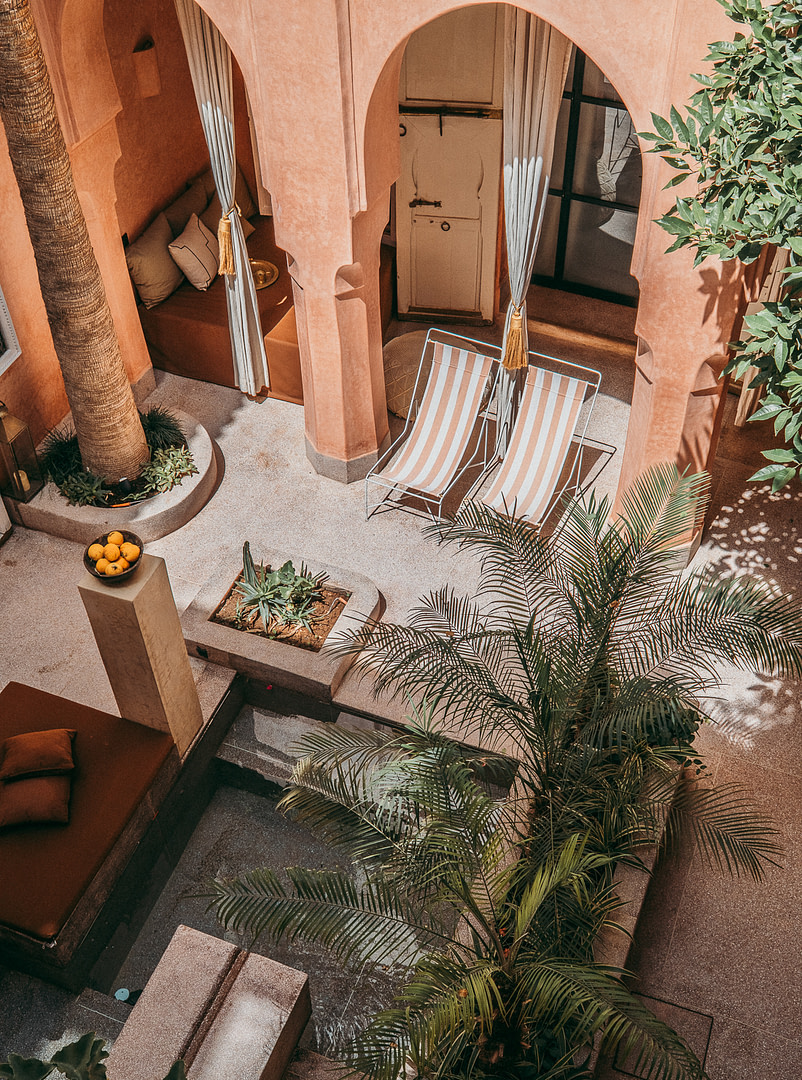
If it’s your first time in Marrakech, stay inside the medina. Being able to step straight into its zigzagging alleyways each morning and retreat somewhere peaceful minutes later will define your trip.
For me, that place was Riad Brummell Medina. Book it if you want what I had: a quiet, design-forward riad a few minutes’ walk from Dar El Bacha, with cool dusty-pink interiors, a small rooftop pool, and a delicious traditional breakfast.
Our room was huge, with terraces overlooking the courtyard and ethereal curtains blowing in the air. There was almost no conventional furniture. Beds, wardrobes, and surfaces were built from local stone that stayed unbelievably cold even when it was 40°C outside. We had homemade cake every day and a beautiful sunken stone tub built directly into the floor next to the bed. You had to step down into it, like a tiny private hammam.
On top of that, it was one of the best-value stays I’ve found anywhere.
Also consider:
- IZZA – The entire riad doubles as a gallery, with museum-worthy contemporary art everywhere you look, extraordinary interiors, and a restaurant that ended up serving my favorite meal of the trip.
- El Fenn – El Fenn is bolder, more colorful, and more social. Its famous red rooftop overlooks the Atlas Mountains, the interiors mix contemporary design with Moroccan details, and the downstairs concept store is dangerous if you’re traveling with limited suitcase space.
DAY ONE
Get Lost: The Medina
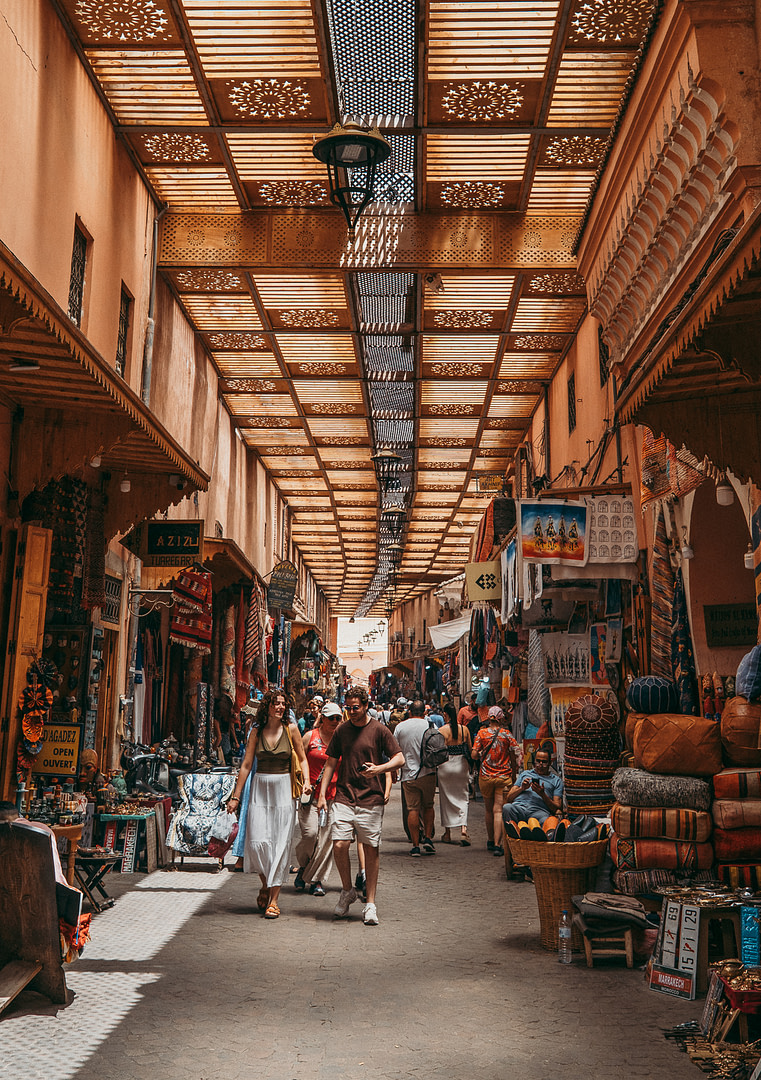
I made surprisingly few plans for Marrakech. I wanted to discover the city the way you do as a kid, by turning corners just because they looked interesting. And the medina rewards exactly that.
So wander. Watch artisans hammer brass by hand, shop for hand-painted ceramics and tiny clay pots of Aker Fassi, the traditional terracotta lipsticks made from dried poppy petals and pomegranate rind. Bargain. Ask questions.
I know the vendors fighting for your attention can get exhausting, but don’t shut them out completely. We got some of our best tips from them. One pointed us toward the dyers’ souk, streets hung with wool dyed in every color imaginable, drying in the sun. Another sent us down a side street where elderly woodturners were carving cedar by hand away from the tourist crowd. We’d never have found them otherwise.
Some of my favorite discoveries happened by accident. We jokingly followed a tour group through a doorway and ended up in a tiny herbalism museum, watching argan being ground into butter in a stone vessel. Another wrong turn led to a women’s craft cooperative.
So here’s my advice: Put Google Maps away every now and then. This place knows where it’s taking you.
Golden Hour: Jemaa el-Fnaa
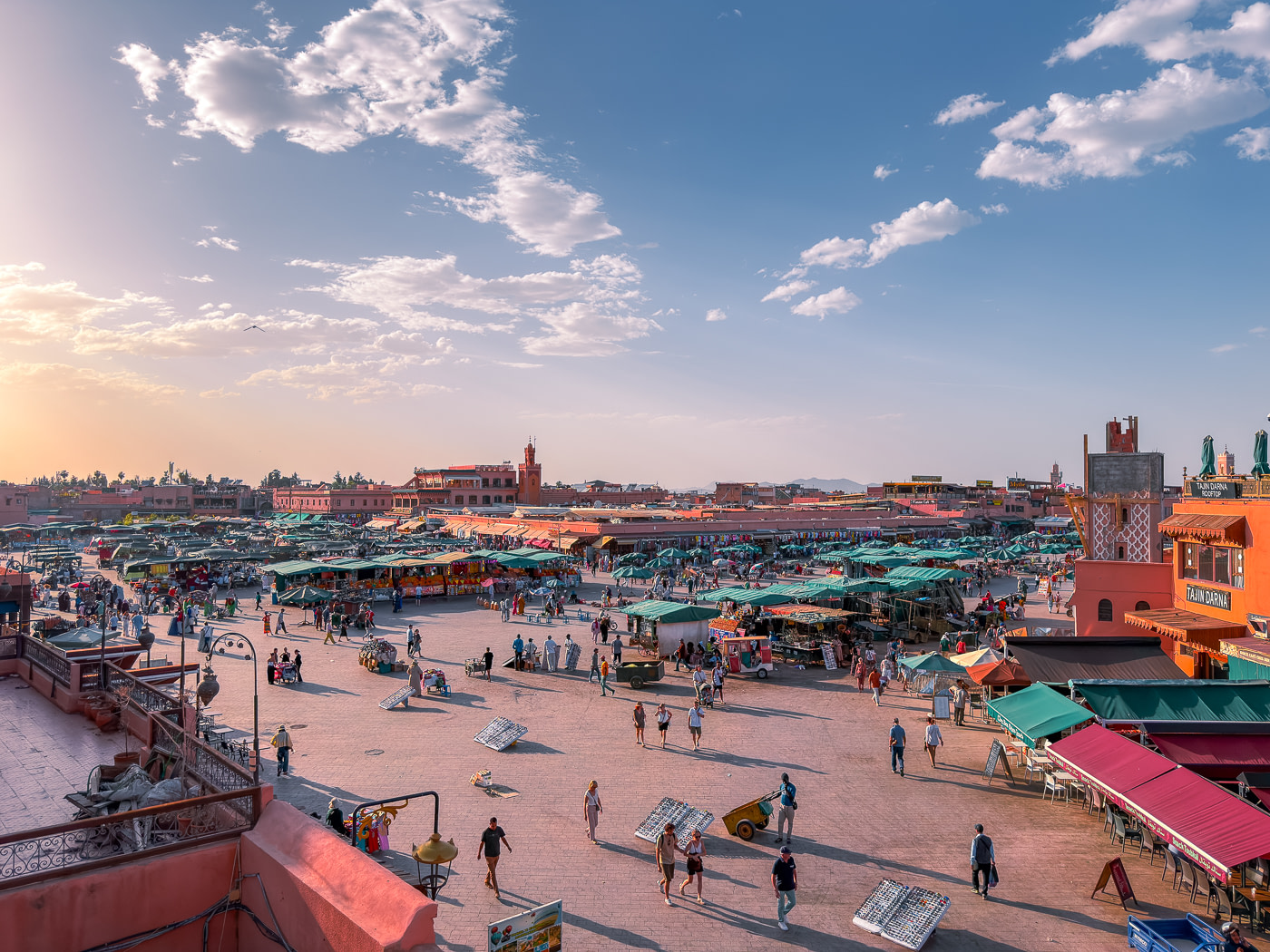
A little before sunset, start making your way toward Jemaa el-Fnaa and find yourself a rooftop. This is one Marrakech spectacle you want to see from above before throwing yourself into the middle of it.
We drank cold lemonades and snacked on zucchini fritters at Nomad, then moved to Mo-Mo for mint tea, spiced coffee, and a view of the square slowly changing below us. And slowly is the magic of it.
The light turns gold, plumes of charcoal smoke begin rising from the food stalls, and the pink desert sky melts into deep twilight. The crowds thicken. Vendors start setting up their stalls with astonishing speed. Drums and voices grow louder. The call to prayer cuts through it all. One by one, the lights come on.
It’s hard to describe what happens to that square as day slides into night without sounding like you’re exaggerating. Watching it unfold from above, all at once, felt visceral, like something that’s been happening exactly this way for centuries and will keep happening long after you’ve left. Downright memorable.
Eventually, we climbed back down to be inside it. Street level is a different experience entirely: the colors, the sounds, the lingering dust, the aroma of spices and grilled meat clinging to the warm evening air, all of it hitting every sense at once. We wandered through the thick of it all, stopped to photograph the cobras and their charmers, and let ourselves get swallowed by the chaos.
One practical note: Bring cash, and expect to pay for every photo you take of a street performer. It’s the deal, and it’s a fair one.
Dinner by Chance: Palais Moulay Said
We deliberately hadn’t booked dinner that first night. The plan was to have no plan.
After watching Jemaa el-Fnaa slip into night, we wandered around the medina until curiosity turned into hunger. We poked our heads into a couple of restaurants, but without a reservation, there was no table to be had.
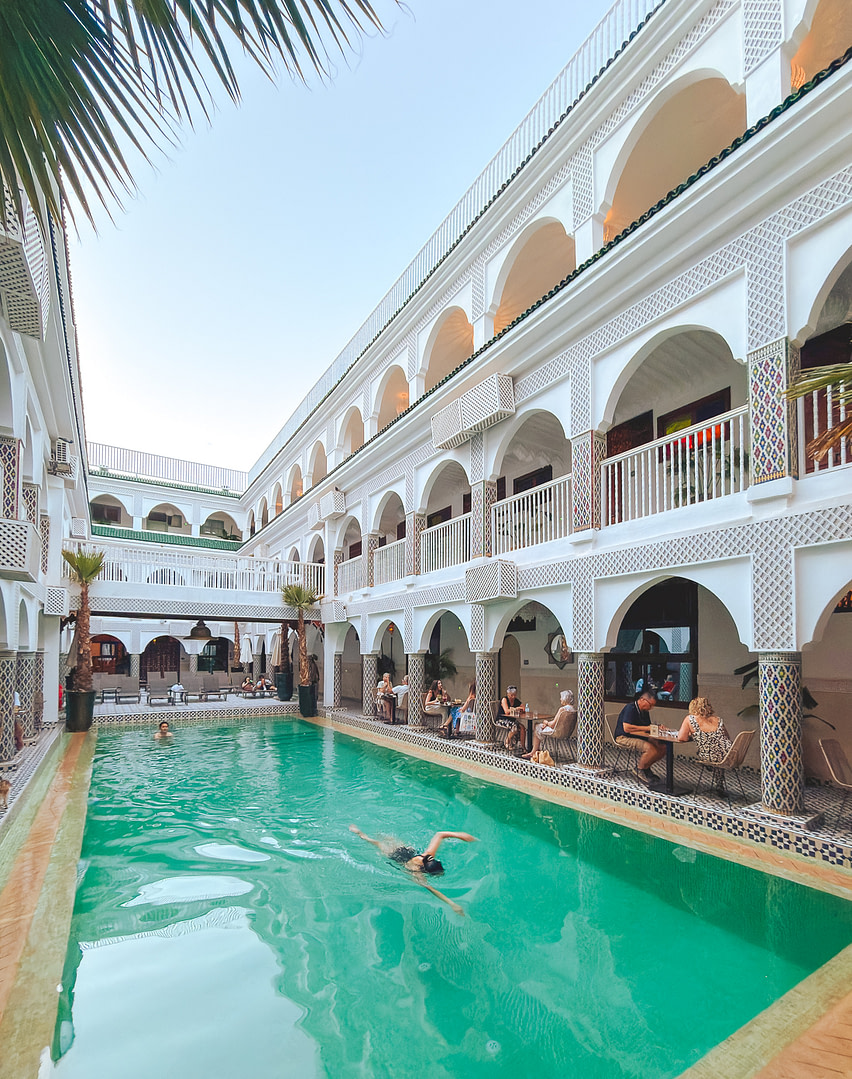
Then, completely by chance, we stopped outside Palais Moulay Said.
We chatted with the waiter at the door, who invited us in, gave us a little tour of the riad, and told us to choose where we wanted to sit. Then I saw the pool.
Glowing electric blue in the middle of an ornate courtyard, with dinner tables lining the water, it looked almost cinematic, like we’d accidentally wandered onto the set of an old movie. A couple was swimming at one end, dressed-up guests were eating a few feet away, and cats lounged around as if the whole palatial scene belonged to them.
Obviously, we stayed.
The food is mostly traditional Moroccan, with a few crowd-pleasers like burgers thrown in. It was good, reasonably priced, but honestly, I barely remember what I ate.
I remember that blue pool.
And for a dinner we hadn’t planned at all, that felt like a pretty good result.
After Dark: Nobu Marrakech
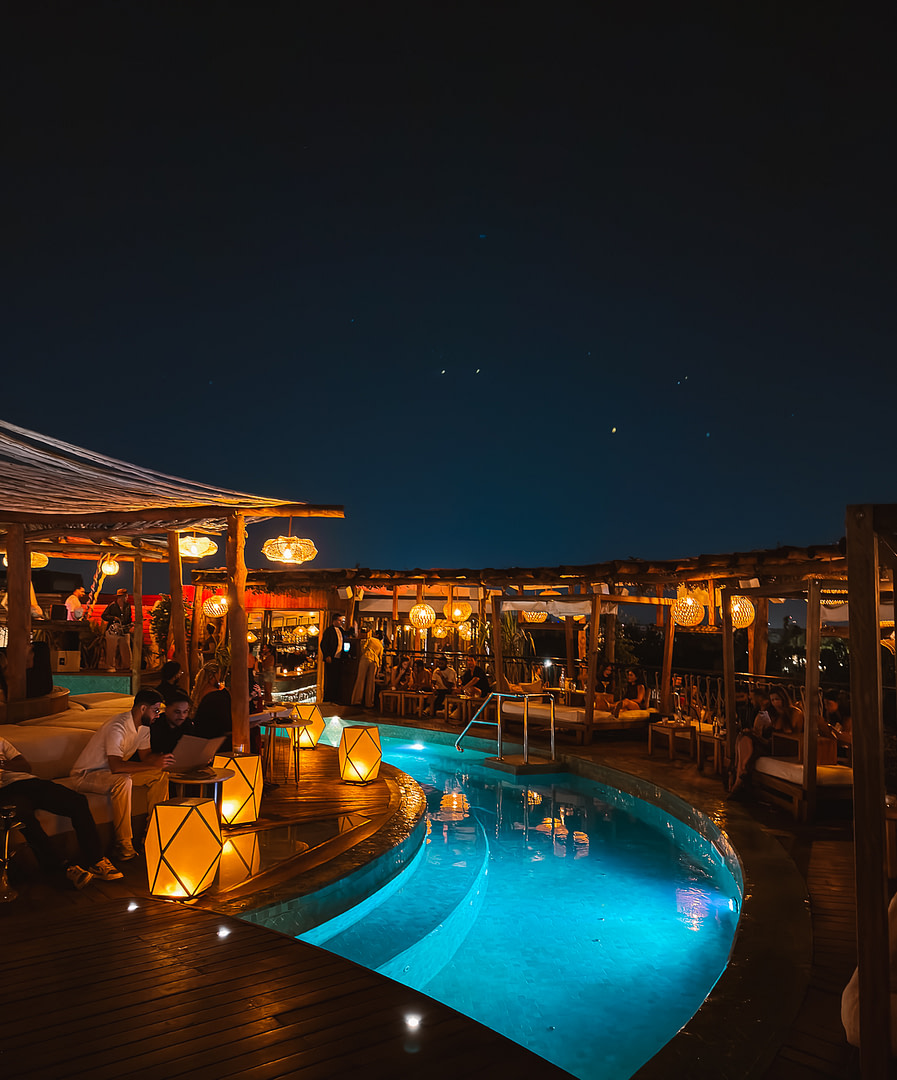
Take a taxi to Nobu’s storied rooftop bar in Hivernage’s Golden Triangle. The ride takes barely ten minutes, but suddenly the medina’s dusty alleys give way to wide boulevards, modern buildings, and a version of Marrakech I hadn’t met yet.
Several friends had recommended Nobu Marrakech, but I was skeptical about coming here; I thought it might be too contemporary, too flashy, and disconnected from the city’s true culture. With only 48 hours in Marrakech, I didn’t want to waste a night somewhere that could have been anywhere else. But I was wrong to worry.
Yes, the rooftop is flashy, but it’s also beautiful, and the entertainment is first-class: dancers, singers, and performances mixing Moroccan traditions with a more modern edge.
Order their special Negroni made with a local spirit instead of gin. It’s potent, unusual, and almost a cultural experience in itself.
We haven’t tried the food, only came for drinks, though the dishes on neighboring tables looked fantastic, and the kitchen seemed to stay open very late.
By then, we were tired from the flight, the culture shock, and hours spent trying to take in the medina. I remember sitting on one of the rooftop swings, wind in my hair, dancers moving around, completely unable to wrap my head around the fact that this was still Day One.
Marrakech was starting to feel a little like a desert mirage: one improbable scene dissolving into another before I’d quite made sense of the last. And I couldn’t have asked for a better ending to our first day.
DAY TWO
Don’t Miss: Dar El Bacha & Bacha Coffee
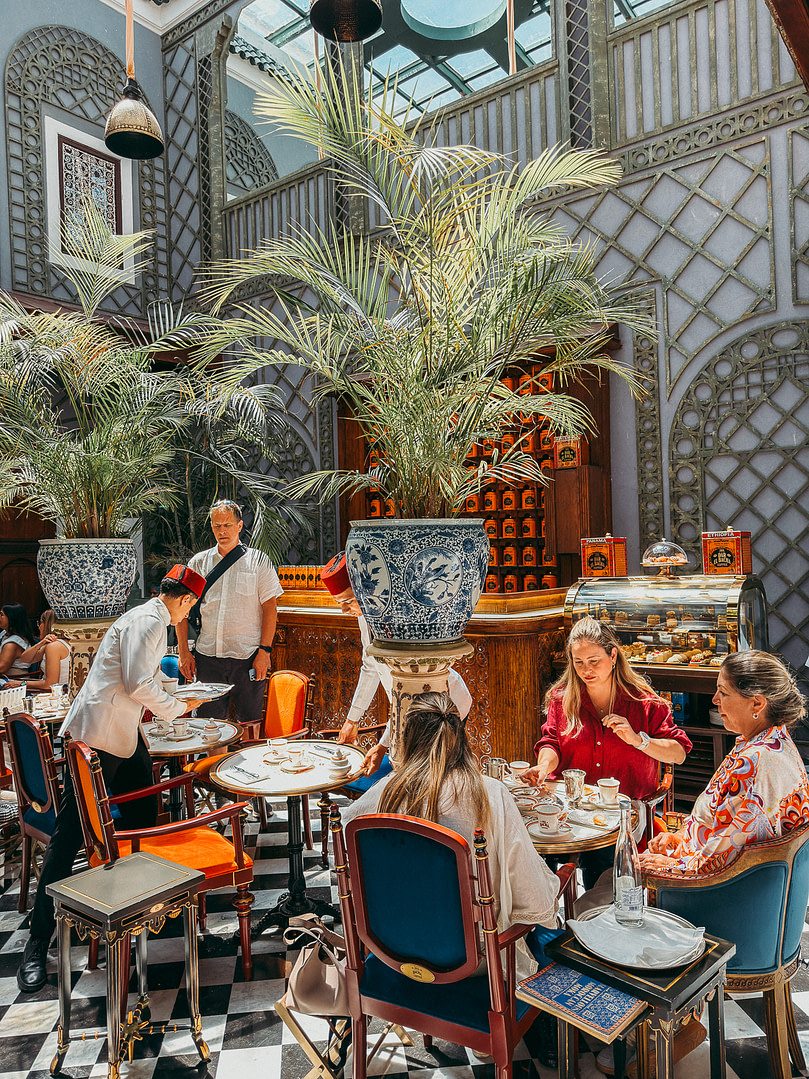
Dar El Bacha was built in 1910 and later became the residence of Thami El Glaoui, the Pasha of Marrakech. Today, it houses the Museum of Cultural Confluences.
The palace itself is outstanding, with rooms opening one after another around a serene courtyard, carved cedar ceilings, intricate zellige, fountains, orange trees, and that ridiculous level of detail Marrakech does so well.
Then, tucked inside, there’s Bacha Coffee.
The original coffee room dates back to 1910, when Dar El Bacha hosted an extraordinary cast of visitors, from Charlie Chaplin and Josephine Baker to Winston Churchill and Franklin Roosevelt. Today, you sit beneath its glass roof surrounded by black-and-white marble, carved cedar, brass, and shelves upon shelves of coffee.
Order whatever coffee sounds most unfamiliar. There are over 200 Arabica coffees to choose from, and the staff is used to walking visitors through the list. It arrives with real ceremony, poured tableside from a gilded pot, alongside a raspberry-and-cinnamon croissant if you want to lean fully into the fantasy.
A quick tip from experience: Bacha Coffee operates on a first-come, first-served basis. There’s often a line at the door; if there is, add your name on the list at the counter and spend the wait wandering the museum.
When It Gets Too Hot: Le Jardin Secret
Sooner or later, you’ll need shade.
By mid-afternoon during our May heatwave, Marrakech was hitting us with dry, 40-degree heat. Pavements are baking, and your skin literally burns under the sun. Speaking of which, it’s best to cover as much as you can with flowy, natural materials. Nothing beats linen in my book.
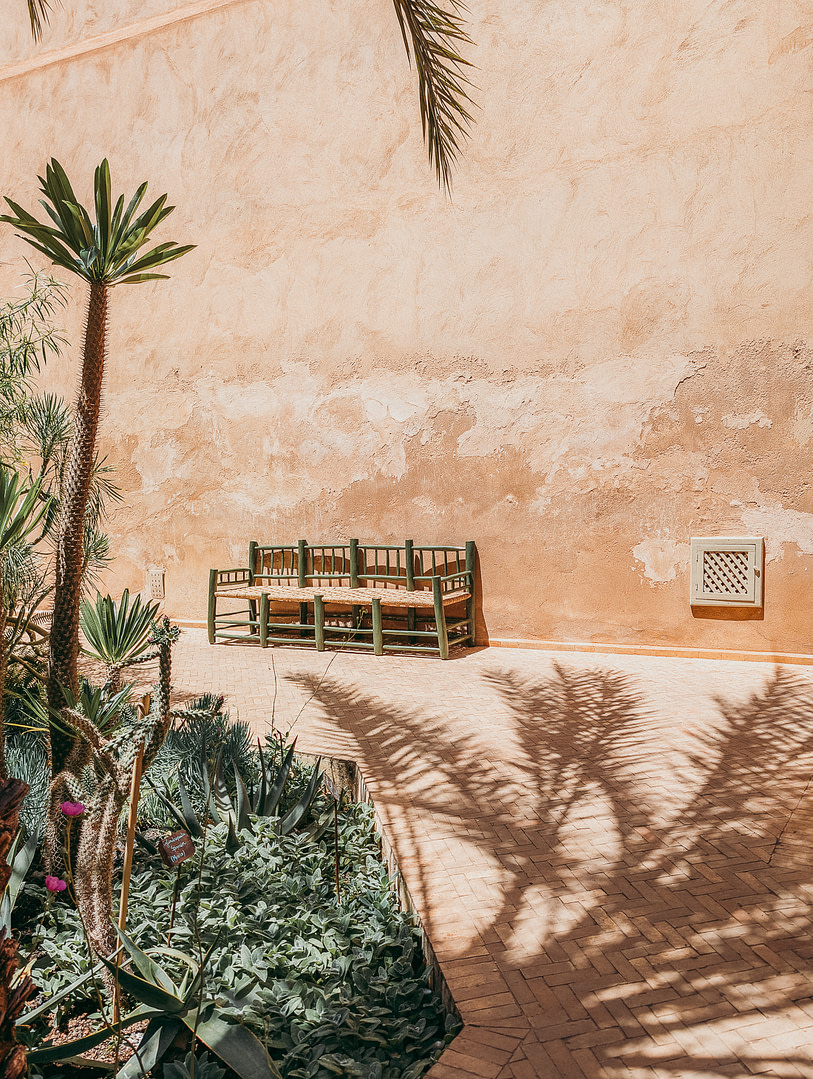
Then there’s the noise, the crowds, the constant dodging of scooters. When your senses are officially fried, because they will be, walk straight to Le Jardin Secret for a full sensory reset.
Hidden behind the walls of the Mouassine quarter are two very different gardens: a perfectly symmetrical Islamic garden crossed by water channels and planted with fig and pomegranate trees, and a looser, wilder exotic garden filled with plants from around the world.
Look out for traces of the ancient khettara system that once carried water from the Atlas Mountains into Marrakech.
If the heat allows, climb the corner tower for views across the medina’s terracotta rooftops toward the mountains (ticket sold separately).
But mostly, just enjoy the quiet. Sit on a marble bench in the shade. Listen to the water trickling through the courtyards and the rustle of palm fronds overhead. It’s nice, and you can finally hear yourself think again.
Worth the Detour: Lunch at El Fenn
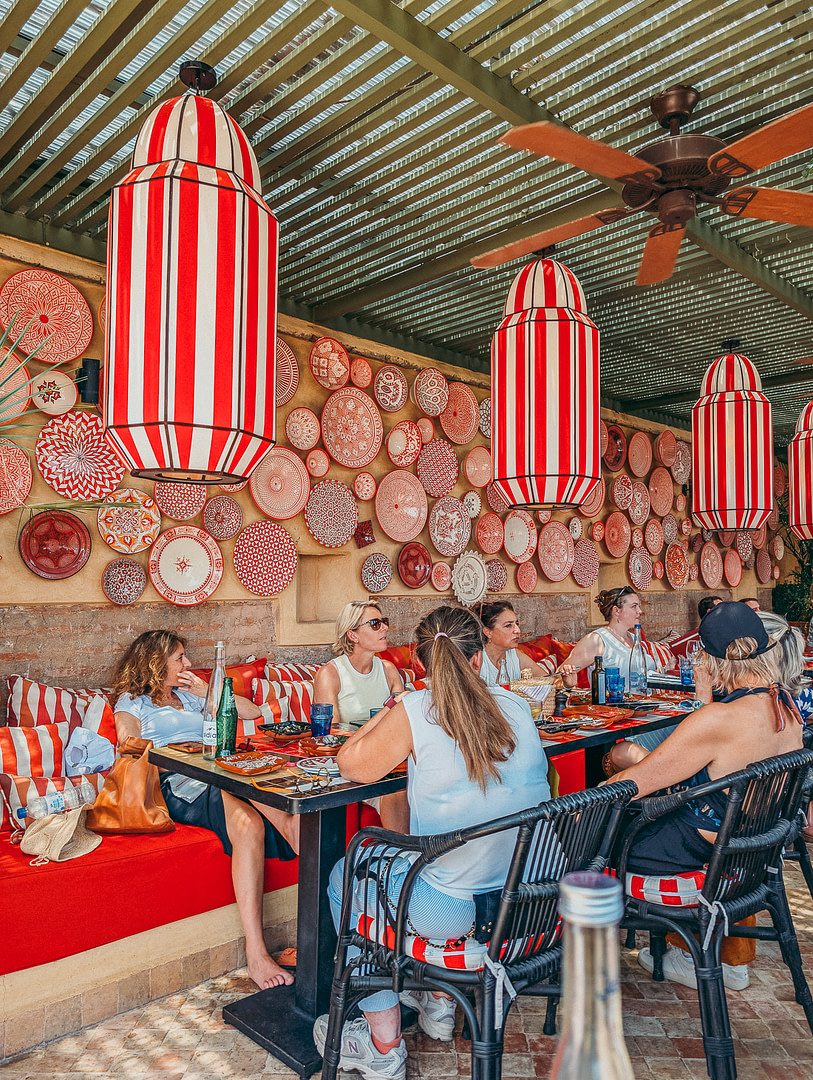
If you want a meal that feels like stepping straight onto the cover of a high-fashion magazine, book a lunch table on the rooftop of El Fenn.
The food isn’t traditionally Moroccan, but everything we ordered, from the pasta and bread to the homemade lemonade, tasted like a small miracle. On top of that, the whole place is gorgeous: colorful, arty, vibrant, and full of stylish people having a very good afternoon.
At some point, you’ll look up past the edge of the terrace and see the Atlas Mountains, snow-capped and towering above the red rooftops like they’ve been photoshopped into the skyline. All while you’re sitting there sweating in 40°C heat. It’s surreal.
Whatever you do, don’t rush off after lunch. Budget an extra half an hour to explore the concept store downstairs. It is a brilliantly curated space packed with contemporary Moroccan design, fashion, books, and ceramics that wouldn’t look out of place in Mayfair.
Leave Room for Surprise: 1112
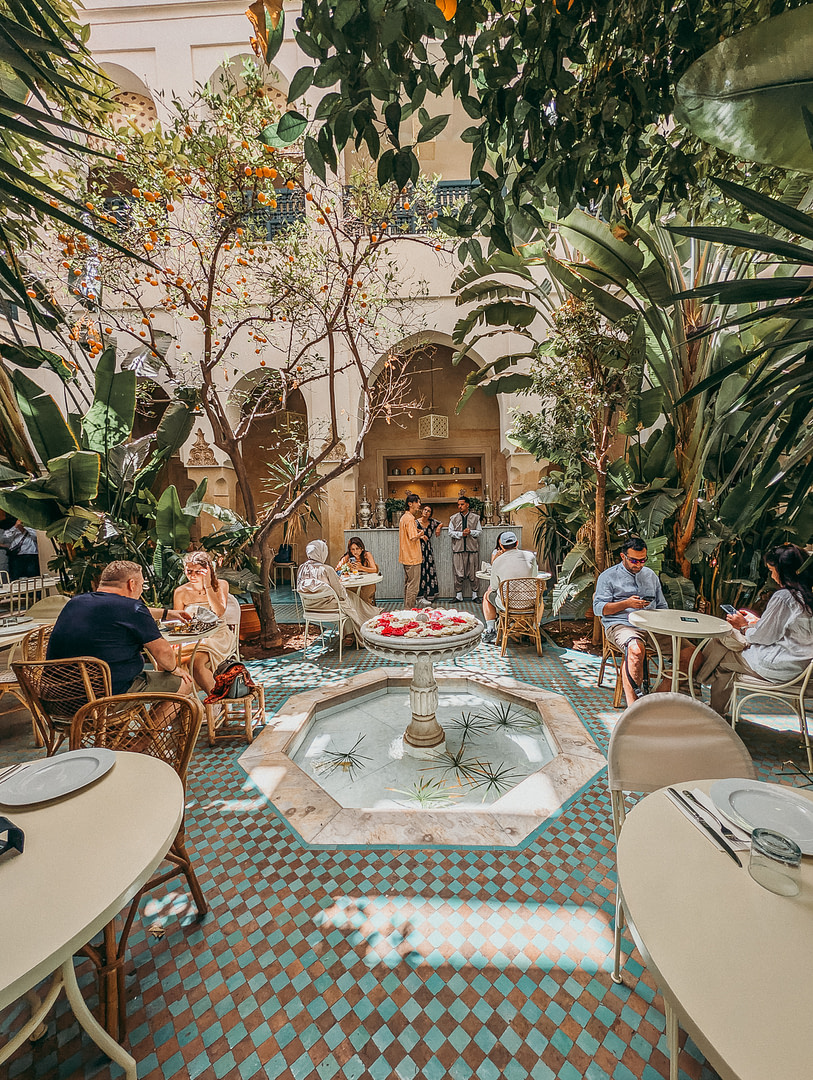
It was hot; we were wandering without much purpose, and then I noticed a beautiful old building with a minimal 1112 sign outside. Something told me there had to be more behind that door.
There was.
Inside is a 300-year-old riad wrapped around what might be the most beautiful courtyard I saw in Marrakech. A pale-blue fountain sits at its center, surrounded by mesmerizing tiles, lush greenery, and little tables tucked beneath the arches. Unfortunately, every one of them was taken.
So, no tea in the courtyard for us. But I love a good tea shop almost as much, and 1112 has a wonderful one. The teahouse specializes in blends representing Morocco’s different regional tea traditions, and I left with several bags for friends and one for myself: an aromatic mix with four kinds of mint and absinthe. There’s also a restaurant and a small museum devoted to tea culture.
Next time, I’m booking the table, and you should too. This place is magical.
A Change of Pace: Guéliz
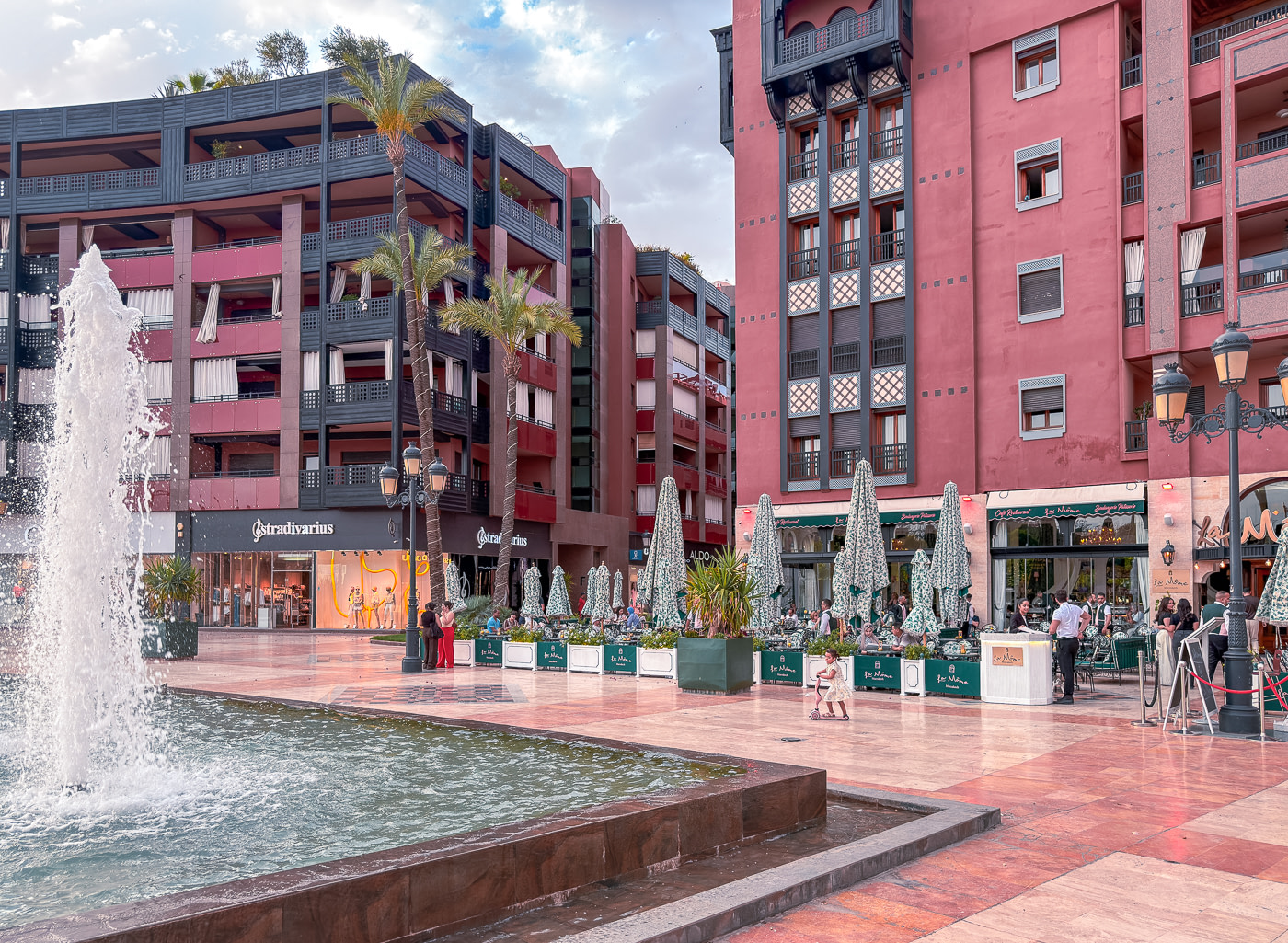
Need a break from the medina? Head to Guéliz, the modern part of the city. We planned a late afternoon into evening there, and I’m glad we did.
When I travel, understanding a place matters more to me than ticking off its landmarks. I want to know what it was, what it is now, and, perhaps most interestingly, what it’s becoming. The best way I know to do that is to walk its streets, watch its people, browse its shops, drink its coffee, eat its food, and venture into the neighborhoods no guidebook sends you to.
Guéliz is the modern, European-style side of Marrakech. On the surface, it has less of the old-world charm than the medina, but once you get a taste for it, it’s enthralling. You’ll find shopping centers, pockets of green, and busy boulevards.
In a strange way, it reminded me of Romania fresh off the fall of communism. There was contrast and chaos, and not many pretty sights, but the air was thick with change, possibility, and surprise. There’s a raw energy to places in transition, and Guéliz has it.
Coffee Break: Thirty5ive
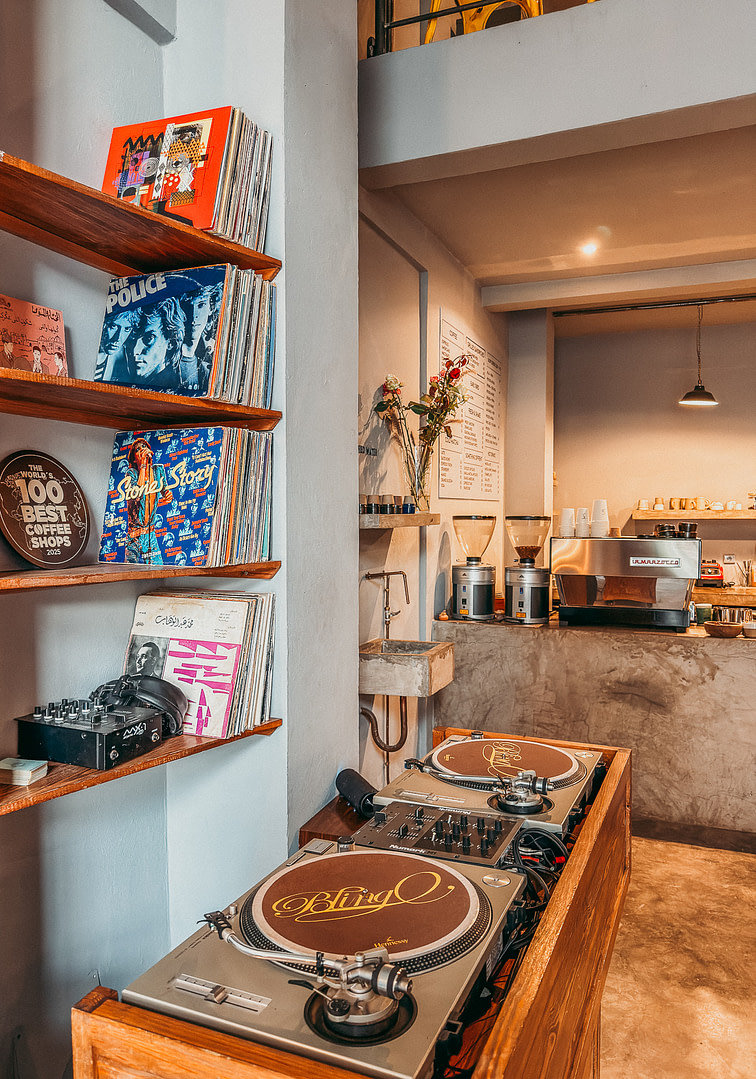
If someone blindfolded me and dropped me inside Thirty5ive, I’d probably guess London. Maybe Berlin.
We only had two days in Marrakech, but getting a real taste of its coffee culture wasn’t negotiable. Bacha Coffee was high on the list, as it should be for anyone, but I was just as curious about the new wave of independent spots opening across the city. We tried a couple around the medina, but none came close to Thirty5ive.
Inside, it’s all minimal concrete, high ceilings, and mismatched chairs. Smooth jazz spins on vinyl from a salvaged wooden turntable stand. Outside, a sign written in chalk on a sidewalk board reads:
This morning, with her, having coffee – Johnny Cash, when asked for his description of paradise.
We ordered a spread of different drinks to taste our way through the menu and took them outside to the tiny terrace. A hot wind picked up and started blowing my midi shirt dress around, exposing a knee. For a second, I felt an odd flash of guilt about local dress codes.
Then I looked around. The stylish group at the next table was discussing theater, art exhibitions, and London in perfect English. Nobody cared about my knee. Jazz drifted out from the industrial interior, and then, completely unexpectedly, it started to rain.
I sat there thinking: Marrakech is cool.
Much cooler, and much more complicated, than I’d imagined.
Thirty5ive was, without doubt, my favorite coffee shop in the city. But more than that, it was another little crack in the version of Marrakech I’d arrived with in my head.
Book Ahead: Sahbi Sahbi
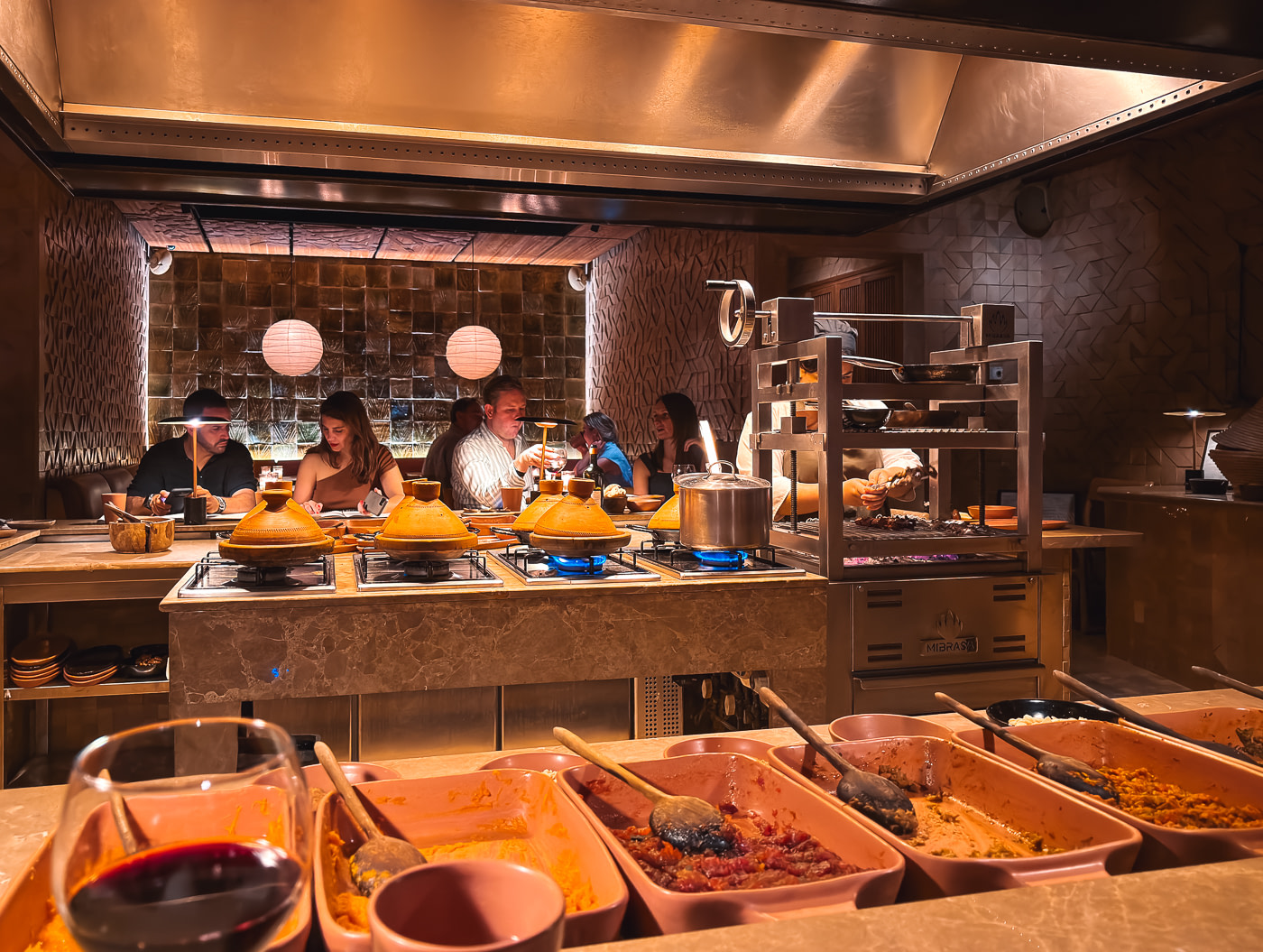
For dinner, book Sahbi Sahbi, a restaurant run entirely by women and designed by Studio KO around an open kitchen, putting the women cooking at the center of the room.
I’ll admit, my expectations were probably too high. After some exceptional meals elsewhere in Marrakech, the food itself didn’t blow me away. The tajine was nice, and I enjoyed the array of small starter dips, even if nothing stood out as unforgettable.
But I am glad we went. I truly admire the concept and the talented women running it. It’s an important, empowering project in a beautiful, modern space, celebrating Moroccan home cooking, and I’d recommend it for everything it represents. Just make sure to plan ahead, as tables fill up weeks in advance.
Cocktail Hour: Baromètre
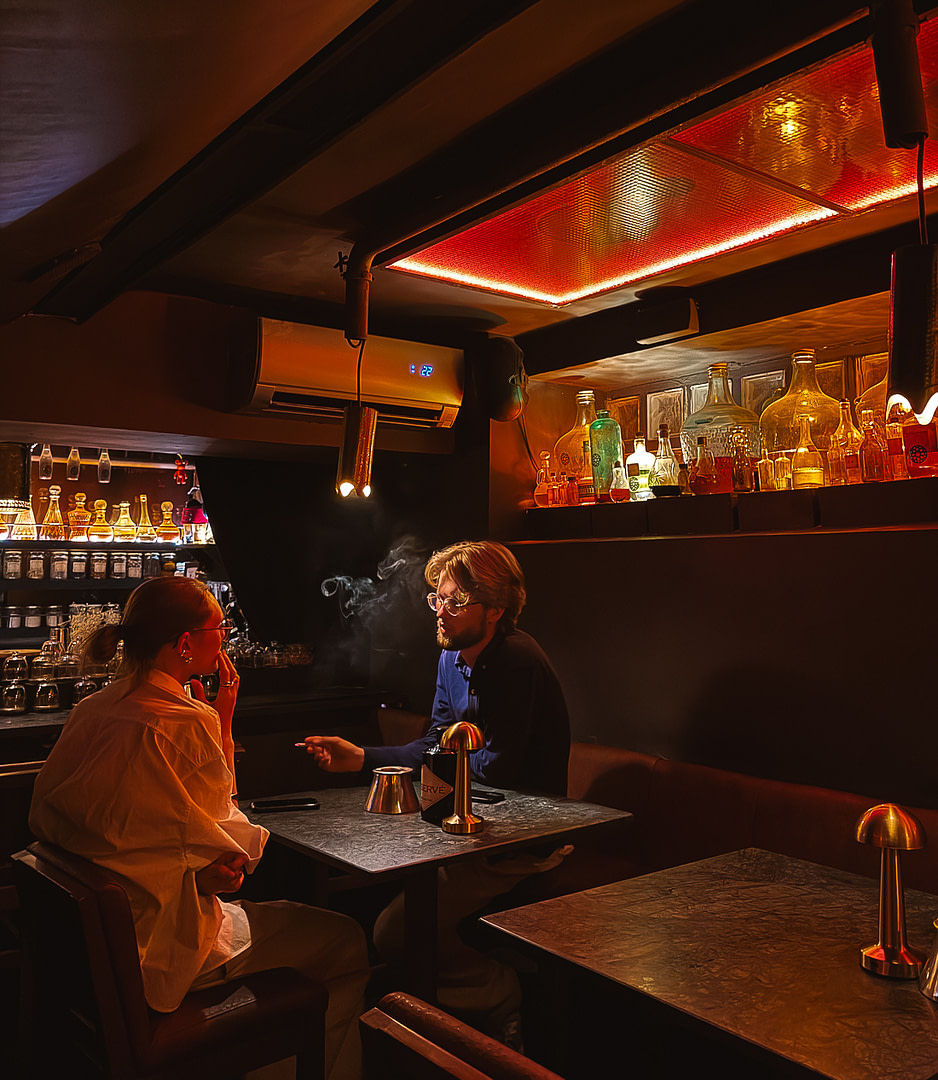
Following Google Maps from Sahbi Sahbi down a few lively streets, we turned a couple of corners and arrived in front of a single, standalone door set right into the sidewalk.
In a cool, symbolic quirk, the bouncer smiled and explained that we had to knock first so he could unlock it. We knocked, the door swung open, and we passed through like stepping into a portal to another world.
Baromètre was probably the last thing I expected to find in Marrakech, and I’d had my fair share of surprises by that point. A subterranean cocktail bar that looks part steampunk laboratory, part mad scientist’s workshop, with serious mixology built around Moroccan ingredients, botanicals, spices, and spirits.
Row upon row of backlit glass apothecary jars filled with herbs and infusions line the dark walls, and even the Art Deco menu feels like a piece of illustrated art. I ordered the Rosée du Matin, a mix of gin, lime, local florals, and house-made chamomile bitters, served inside a frosted silver sphere nestled on a leaf dish with dried blooms and citrus floating on top.
The drinks are purely theatrical, and the inventive food coming out of the kitchen looked so good that I briefly regretted having already eaten dinner.
This was another Marrakech door I was very glad we’d knocked on.
Before You Fly: Lunch at IZZA
If your flight home is in the evening, don’t waste your final few hours sitting at an airport lounge. Instead, make time for one final lunch.
IZZA served my favorite meal of the trip. The food was exceptional, but so was everything around it.
We decided to walk there. It wasn’t far on the map, and by that point, we’d gotten confident about navigating the medina on foot. Big mistake. It was scorching hot, and Google Maps, which is, at its best, a rough suggestion inside these alleys, led us completely astray.
We ended up in a distinctly less traveled stretch of the medina: narrower, quieter, and a little rougher around the edges than anywhere we’d been the two days before. Nothing happened, but I felt a flicker of real fear the entire detour. In retrospect, it was probably more about being a stranger somewhere unfamiliar than about any actual danger.
I don’t regret a second of it. Getting lost at least once is almost inevitable in Marrakech, and even the uncomfortable moments became part of understanding a city I was still trying to figure out. Still, do yourself a favor and just take a taxi.
When we finally stepped through the door, the relief was instant.
Hidden in the northern part of the medina, IZZA is seven old houses stitched together into one extraordinary riad, with peaceful courtyards, sun-dappled terraces, and more than 300 works of contemporary and digital art scattered throughout. Its interiors pay tribute to Bill Willis, the legendary American designer who defined Marrakech’s glamorous 1970s bohemian scene, and the tadelakt walls double as a legitimate gallery.
Climb the twisting staircases up to Noujoum, their rooftop restaurant, where the kitchen revolves around seasonal ingredients pulled from the local souks and the hotel’s own rooftop garden, filtered through a Moroccan menu with a clear European accent.
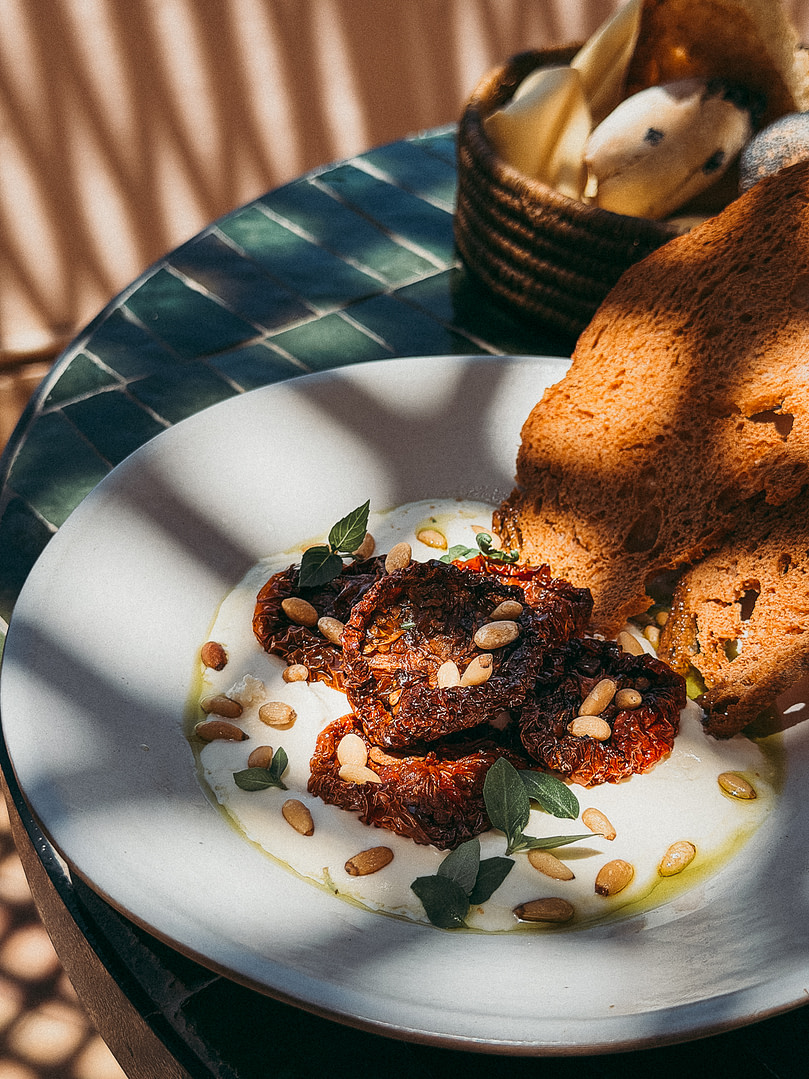
We shared small plates of house-dried tomatoes with whipped feta and argan oil, crispy fried calamari with dill aioli, and a chicken schnitzel alongside exotic iced teas and lemonades.
Sitting under the open sky, taking in those final views across the red-pink rooftops, felt like the ultimate goodbye. I took a moment to digest the food and the sheer speed of the last two days.
I couldn’t have found a better way to close out 48 hours in Marrakech.
Know Before You Go

Best time to visit Marrakech. Aim for March to April or September to November, when the days are warm without the full force of summer. I went in May and loved it, but we hit a heatwave, so it was much hotter than I’d expected. Friends who visited in February had beautiful weather too, so winter can also be a good bet.
Get an eSIM before you land. You’ll need data for maps, taxis, WhatsApp, and figuring out where on earth you are. I used Holafly, as I usually do, and was very happy with it.
Leave holes in your plans. Book the restaurants you care about, then leave room to wander. Most of my favorite discoveries weren’t on any itinerary.
Google Maps is more of a suggestion. Especially inside the medina. Getting lost is inevitable.
Cash, cash, cash. Keep small dirham notes on hand. Taxis, many souk vendors, street performers, and even Uber drivers expect it.
Dress for the sun. Loose linen, covered skin, comfortable shoes. It works for the heat, the culture, and the many miles you’ll walk.
If You Only Have Time for Five Things
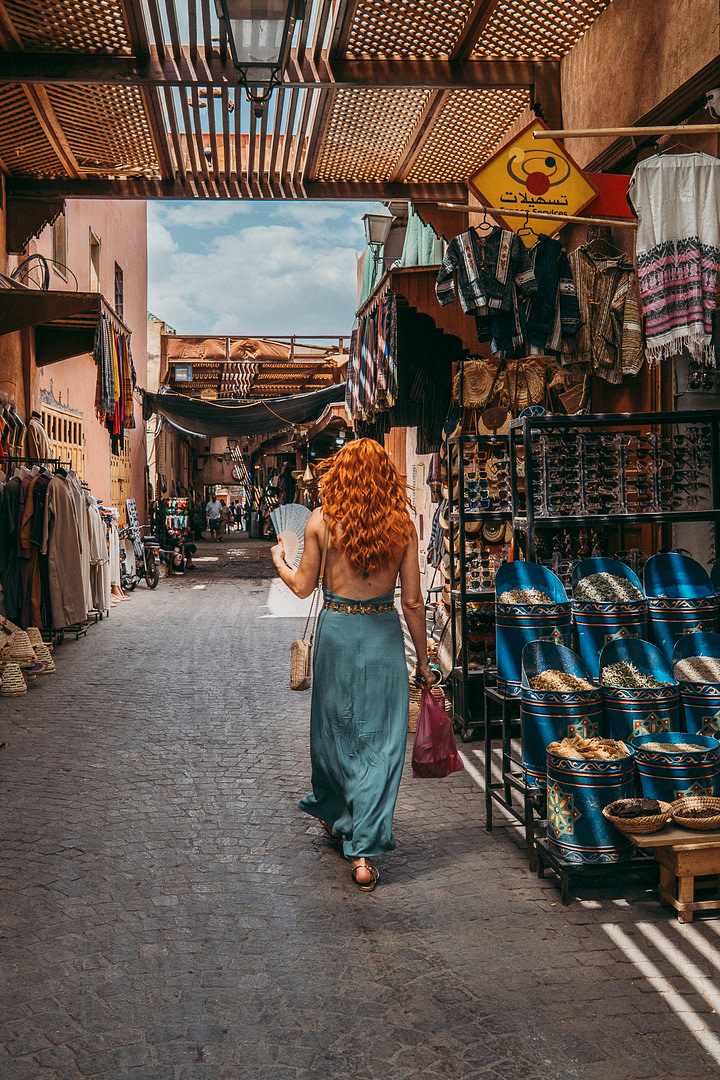
- Get lost in the souks. Preferably without Google Maps.
- Watch Jemaa el-Fnaa shift into night from a rooftop.
- Visit Dar El Bacha. And stay for coffee.
- Book lunch at El Fenn for the design, the food, and the Atlas Mountain views.
- Escape to Guéliz for specialty coffee, craft cocktails, and a taste of new Marrakech.
For Next Time
Jardin Majorelle. Somehow, I left Marrakech without seeing those famous cobalt-blue walls. Next time.
Koutoubia Mosque. We saw its minaret constantly, but never gave it the time it deserved. While non-Muslims can’t enter the mosque itself, next time I want to properly explore the gardens and exterior.
Otto. We actually walked through the door, and the space looked fantastic. We just hadn’t booked ahead, and Marrakech doesn’t do walk-ins for the good tables. Next time, I’m reserving before I land.
A day trip. Many friends have recommended a hot air balloon ride or a night in a Bedouin-style desert camp, but first on my list is a trip to the Atlas Mountains to explore the villages and meet local craftspeople.