
Florida has 1,350 miles of coastline and roughly 800 miles of it is beach. The sand at Siesta Key stays cool enough to walk on barefoot in August. The sand at Daytona is packed hard enough to drive a car on. Both are Florida beaches. They have almost nothing else in common.
That’s the thing nobody tells you: the Sunshine State doesn’t have a coast, it has four, and they behave completely differently. The Panhandle is quartz sand and green water. The Gulf Coast south of Tampa is calm, shallow and shell-covered. The Atlantic side has surf, sea turtles and rocket launches. The Keys barely have sand at all, for reasons we’ll get to.
So we’ve sorted these 20 beaches by coast rather than ranking them 1 through 20, because “best” depends entirely on whether you’re bringing a toddler, a surfboard, a dog, or a date. Each entry tells you what it’s actually good for, what it costs to park, and when to show up.
The Best Beaches in the Florida Panhandle
The Panhandle sand is almost pure quartz, washed down from the Appalachians over a few million years and ground fine. It’s blindingly white, it squeaks underfoot, and it doesn’t hold heat the way darker silica sand does.
The water reads green rather than blue because of how the light hits the shallow shelf. If you’ve only ever seen Florida from Miami, this coast will not look like the same state.
Pensacola Beach
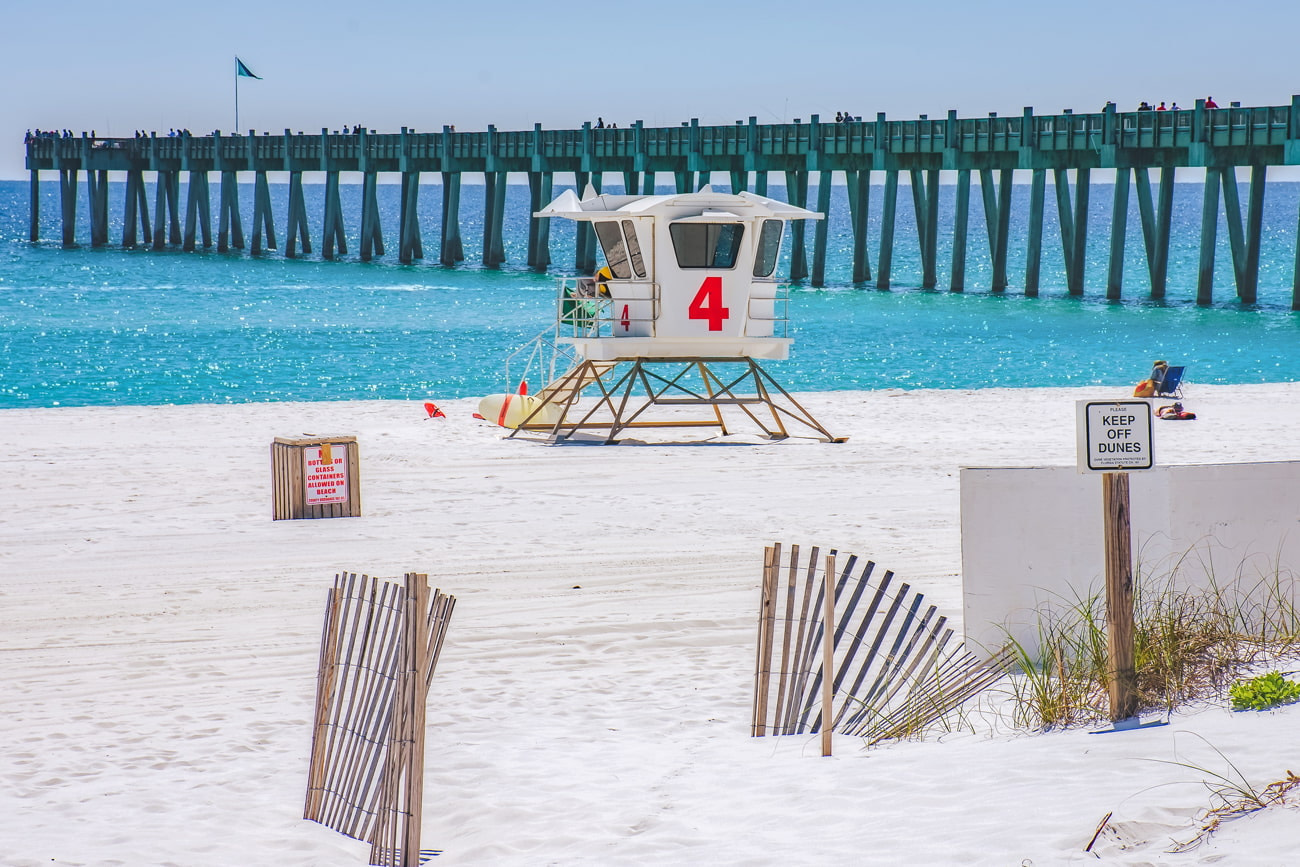
Best for: White sand without a four-hour drive to nowhere
On Santa Rosa Island – a barrier island so thin you can see the Gulf on one side and Santa Rosa Sound on the other from the middle of the road – Pensacola Beach is the most accessible version of what the Panhandle does well. The sand here is the good stuff: soft, bright, and cool enough that you’re not sprinting to the water.
It’s busier than the remote stretches further east, and that’s the trade. What you get for the crowds is infrastructure: real restrooms, real lifeguards, a fishing pier that runs 1,471 feet into the Gulf, and somewhere to eat that isn’t a cooler. Go out to the pier in the evening. Pensacola sunsets have a reputation, and they earn it.
- Where: Santa Rosa Island, Escambia County
- Parking: Free at Casino Beach, but the lot fills by mid-morning on sunny weekends; aim for before 9:30am
- Lifeguards: April-September, 9:30am – 6pm
- Amenities: Restrooms, showers, pier, restaurants, rentals
- Best time: May and September. July is hot and packed.
- Worth knowing: A free beach trolley runs evenings in peak summer, which solves the parking problem for many visitors
Navarre Beach
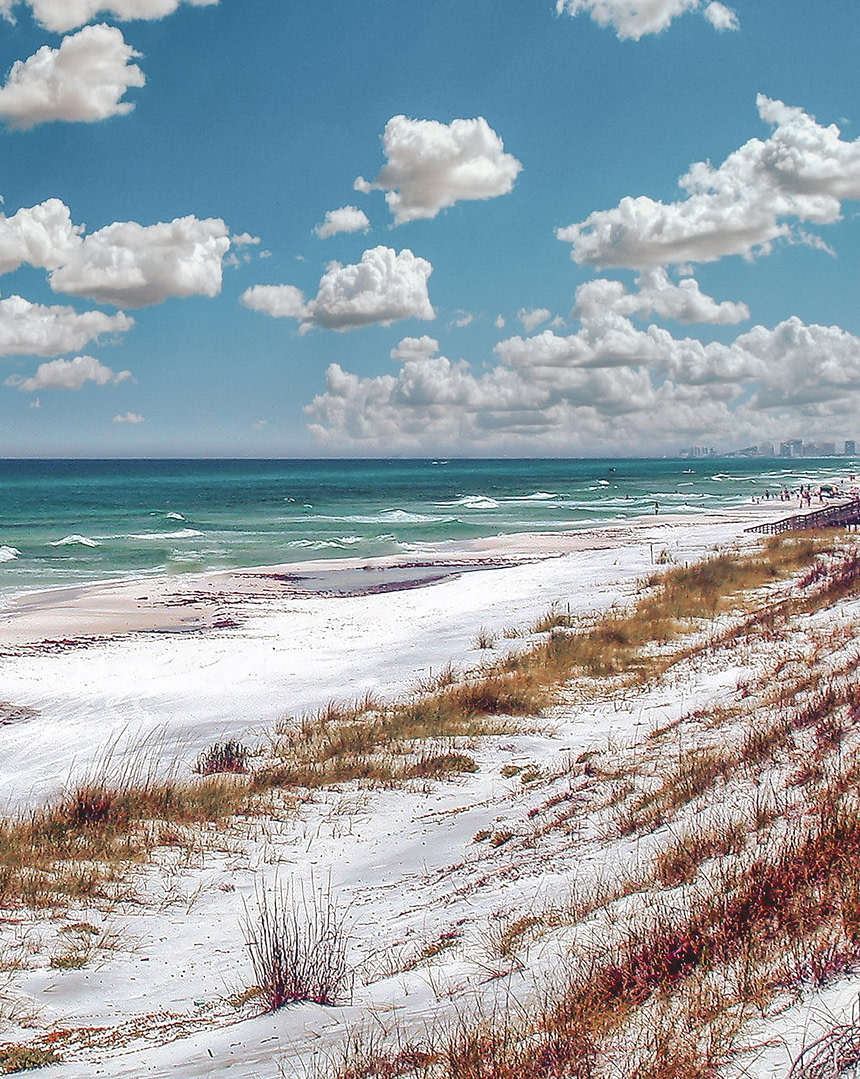
Best for: Snorkeling straight off the sand
Roughly 30 miles east of Pensacola along the island, and a different experience entirely. Navarre is quieter, the water is clearer, and it has something almost no other Florida beach offers: purpose-built snorkeling reefs you can swim to from the sand.
The Navarre Beach Marine Sanctuary built three of them, all inside Navarre Beach Marine Park, all free, all open sunrise to sunset. They are not interchangeable, and picking the wrong one is the difference between a great afternoon and a long swim to nothing you can see.
East sound reef is the one to choose if you’re new to this or bringing kids. About 150 feet from shore, 28 structures in 12 feet of water with the tops sitting 7 feet below the surface. Northwest of the Sandpiper pavilion, marked at all four corners.
West sound reef is the big one: 77 structures across a footprint roughly the size of a football field, directly north of the Red Drum pavilion and the Science Station. But it’s 700 feet out in 20 feet of water with the tops at 14 feet down, which makes it a shore-diving site more than a snorkeling one.
Gulf reef sits 340 feet south of the mean tide line, immediately past the second sandbar, straight out from the Sea Oat pavilion at walkover 40F. 78 structures. On a flat-water day, you can spot them from the surface without even putting your face in. What’s down there: octopus, rays, urchins, sea turtles, and a lot of very colorful fish that have decided this is home.
There’s a fourth complex about a mile offshore in the SR-27 permit area, but that one needs a boat.
The low light pollution here also makes it prime sea turtle nesting territory between May and October. If you’re on the beach after dark in season, keep your flashlight off and pointed down.
- Where: Navarre Beach, Santa Rosa County
- Parking: Free, paved lots at each pavilion
- Amenities: Restrooms, freshwater showers, pavilions
- Snorkel reef: Free, open sunrise to sunset, no permit needed
- Best time: June-August for water clarity; May-Oct for turtles
- Worth knowing: Bring your own mask and fins, rentals are limited
Panama City Beach
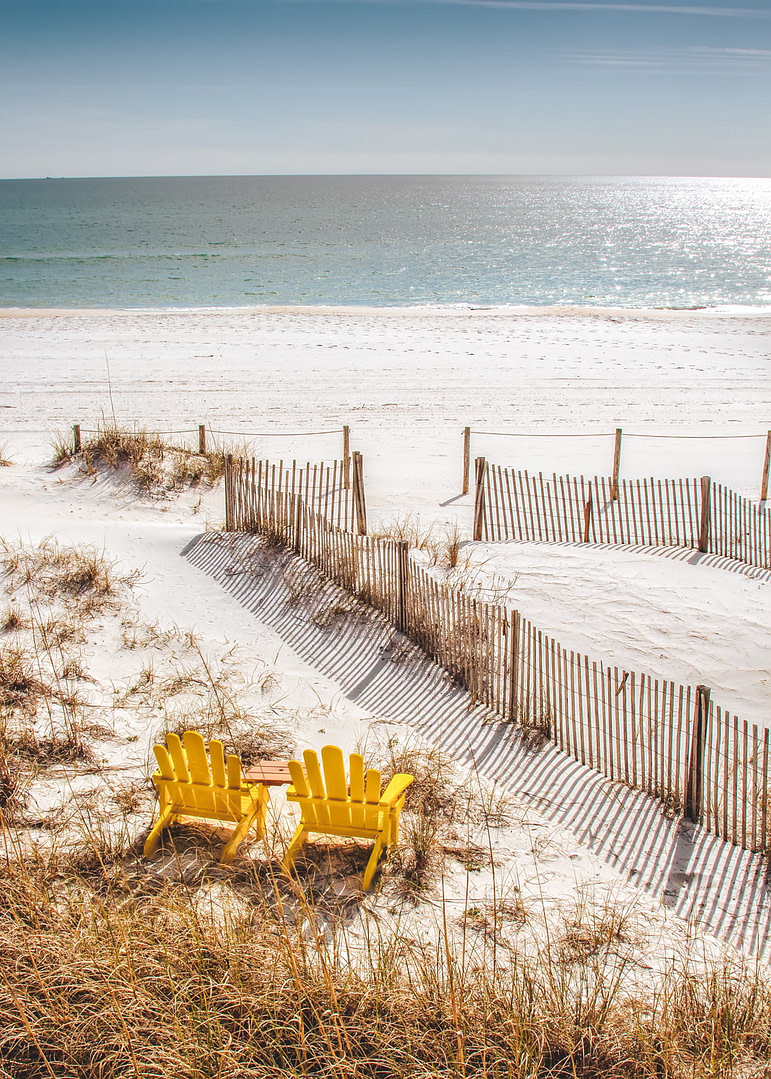
Best for: Getting on, in or under the water
PCB is the Panhandle at full volume: 27 miles of beach, more than 100 public access points, and an entire local economy built on renting you something with an engine. Diving, jet skis, parasailing, banana boats, sunset cruises, deep-sea fishing – most of it can be booked the morning you want it, which is not true of much of coastal Florida in peak season.
If the main strip feels like too much, St. Andrews State Park at the eastern end has calm water behind the jetties, proper snorkeling, and the crowds thin out fast.
- Where: Bay County, Florida Panhandle
- Parking: Free at smaller public access points (Rick Seltzer Park and similar); paid lots near Pier Park and the piers
- State park: St. Andrews State Park is $8 per vehicle
- Amenities: Everything. Restrooms, showers, rentals, food, piers.
- Best time: September-October – warm water, no spring break
- Worth knowing: Watch the flag system. Double red means the water is closed and the rip currents here are not a joke.
Johnson Beach, Perdido Key
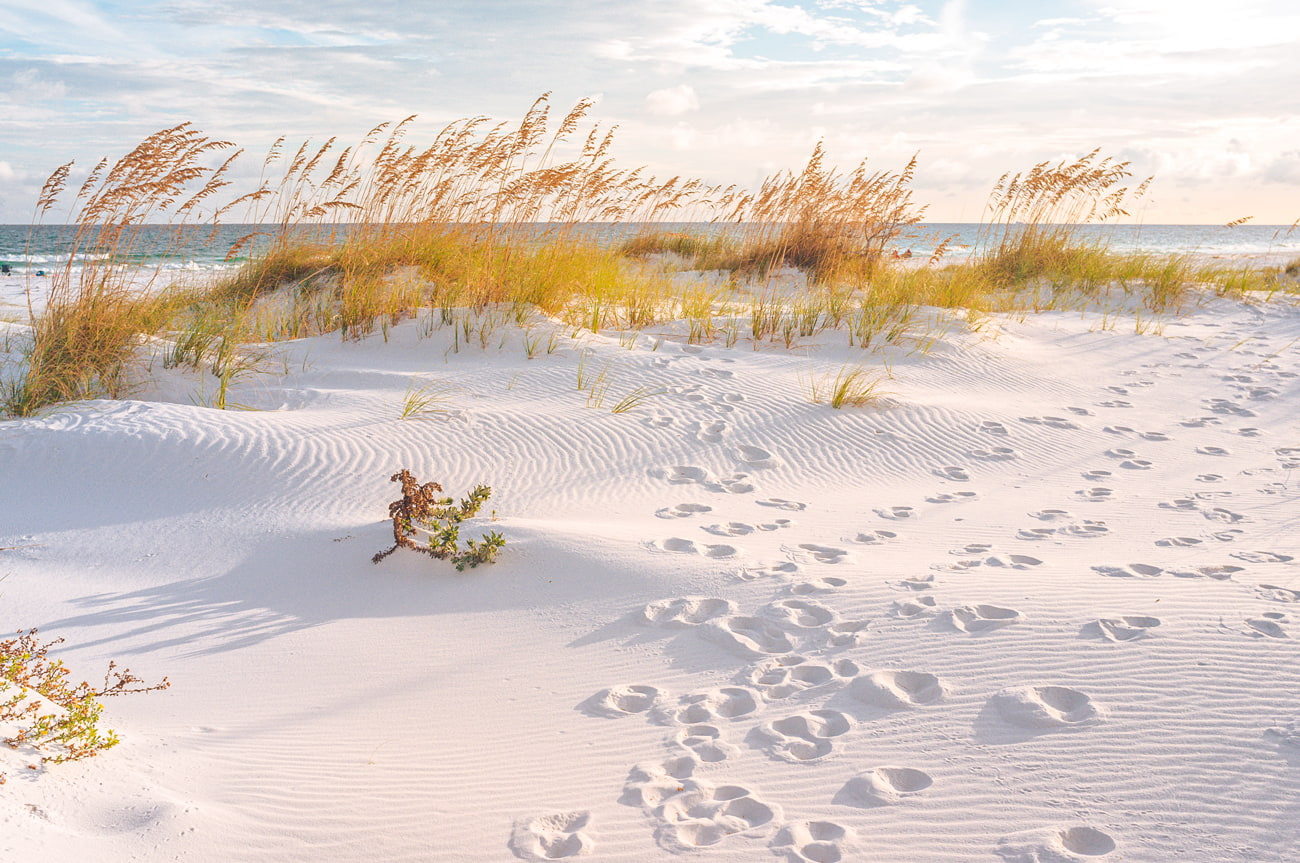
Best for: Boat-in backcountry camping
Part of Gulf Islands National Seashore on Perdido Key, Johnson Beach has the same white quartz as the rest of the Panhandle and one thing none of the others do: you can legally pitch a tent on it.
The catch is that backcountry camping here is boat-in only. You can’t walk in, and you can’t get dropped off. Campers arrive by vessel and camp east of the Johnson Beach turnaround, toward Pensacola Pass. Sites have to be on flat sand without damaging dunes or vegetation, kept 500 feet apart, and capped at 10 people. It’s fourteen consecutive days maximum, then 48 hours off the seashore before you come back.
For day visitors who aren’t camping, it’s simply one of the emptiest good beaches in the region.
- Where: Perdido Key, Gulf Islands National Seashore
- Entrance fee: $25 per vehicle / $15 pedestrian or cyclist, valid 7 days. America the Beautiful pass covers it.
- Amenities: Large lot, two bathhouses with changing rooms, two picnic pavilions, lifeguard station, ranger station
- Camping: Boat-in only, no permit needed for small groups. You must carry an approved container for human waste and pack it out (burying it is prohibited).
- Best time: Spring and fall. Summer brings biting flies.
- Worth knowing: Boat launch on the bayside near the beach entrance
The Best Beaches on Florida’s Gulf Coast
South of Tampa, the water goes calm and shallow, the waves stop being a factor, and a vast underwater plateau starts doing something interesting: catching shells. This is the family-and-shelling coast. It’s also where you’ll find the beach that keeps winning national awards.
One thing to check before you commit to a Gulf Coast beach day: red tide. Karenia brevis blooms show up irregularly along this coast, mostly late summer through winter, and they cause respiratory irritation and fish kills that can make an otherwise perfect beach unusable. Mote Marine Laboratory‘s beach conditions reporting system posts twice-daily, beach-by-beach reports from actual observers. It takes ten seconds, and it’s saved a lot of ruined afternoons.
Siesta Key Beach, Sarasota
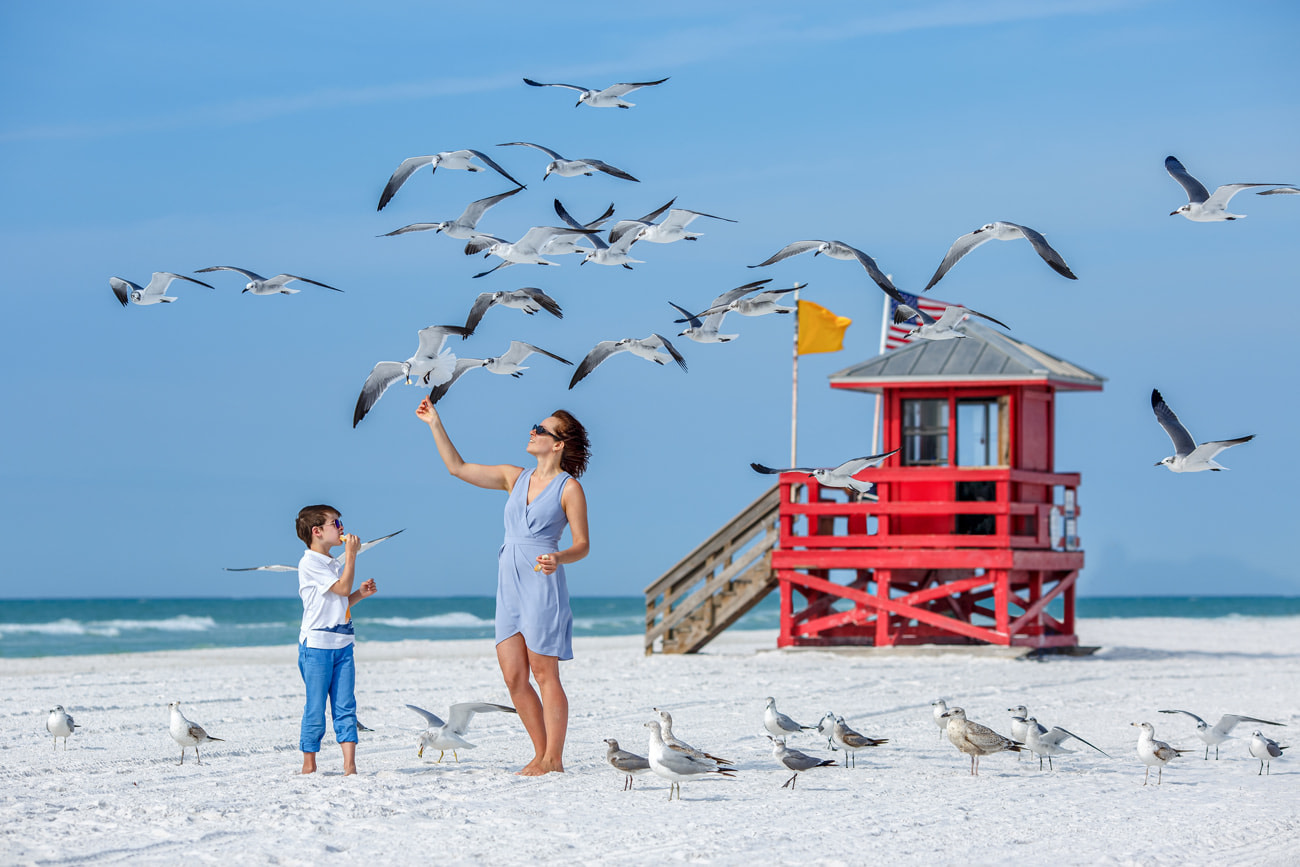
Best for: Families with small kids
Siesta Key has been named the best beach in America more times than anywhere else in the country. Dr. Beach ranked it the best beach in 2011 and again in 2017, making it the first beach to take the top spot twice. Tripadvisor’s Travelers’ Choice awards gave it the top US spot in 2011, 2015, 2017, and again in 2025, and U.S. News named it America’s number one beach for 2026.
The reason is the sand. It’s 99% quartz, which means it reflects heat instead of absorbing it and stays walkable barefoot on days when asphalt is melting. Combine that with a Gulf shelf so gradual you can wade out fifty yards and still be at chest height, and you have the single most forgiving beach in Florida for anyone under four feet tall.
The infrastructure backs it up: over 950 free parking spaces with no time limit, lifeguards seven days a week, playground, concessions, restrooms, showers, and a half-mile esplanade.
- Where: Siesta Key, Sarasota County
- Parking: Free. 950+ spaces, no time restrictions. Full by 10am in season. Go early or go at 3pm.
- Lifeguards: 10am-5pm, seven days a week
- Amenities: Playground, two concession stands, restrooms, showers, shaded pavilions, esplanade
- Best time: Weekday mornings, or after 3pm when the lot turns over
- Worth knowing: The sand genuinely does stay cool. Test it before you assume you need shoes.
Lido Beach, Sarasota
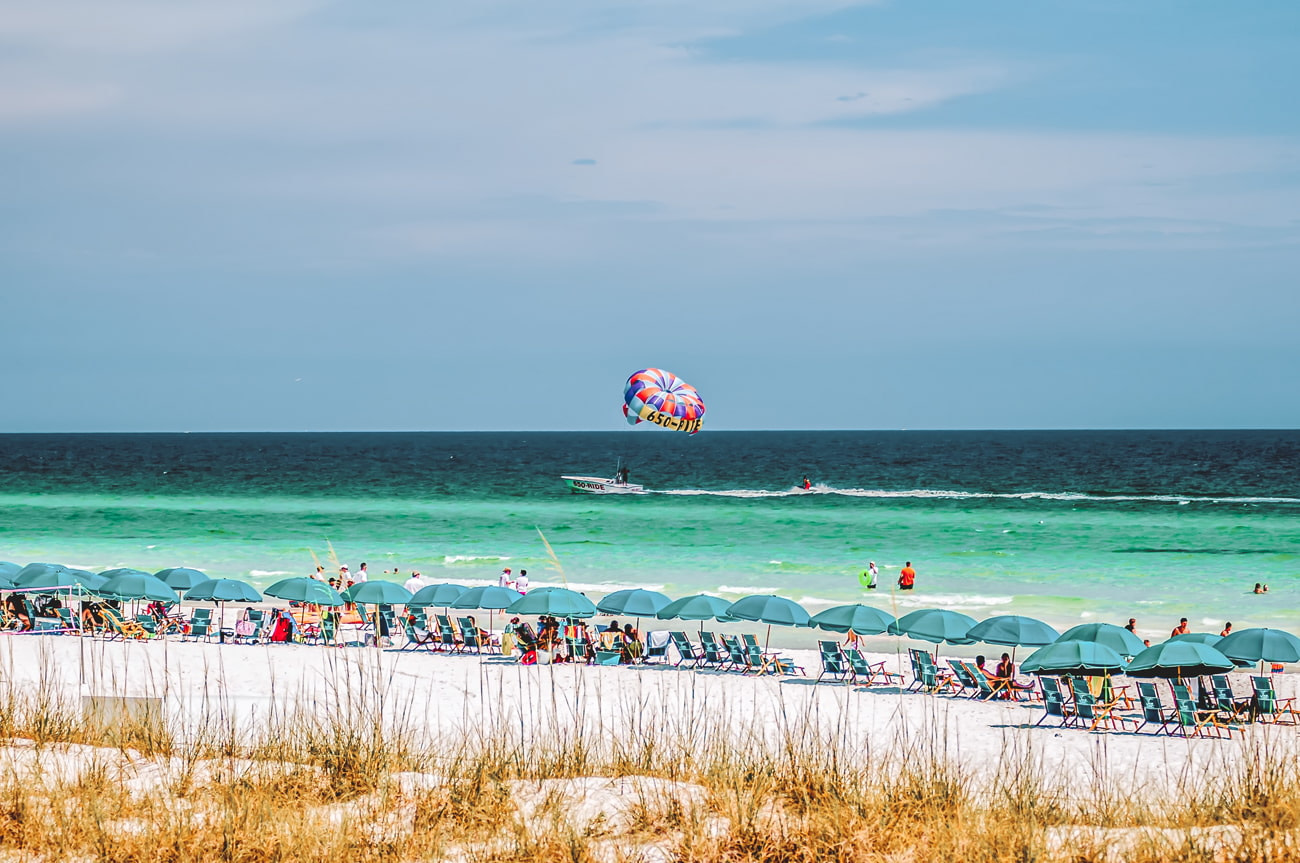
Best for: Couples who want Siesta Key without the school holidays
Ten minutes north of Siesta Key and a completely different atmosphere. Lido has the same soft Gulf sand and the same calm water, minus the families and the award-season crowds. There’s a handful of resorts and rentals behind the dunes, so you’re not roughing it, but there’s also enough space that on a weekday you can feel like you’ve got the shoreline to yourself.
It has a genuinely unusual amenity for a public beach: a 25-meter lap pool, plus a restaurant with covered seating. Lifeguards are on year-round. St. Armands Circle, the shops-and-dinner part of the evening, is a ten-minute walk away.
- Where: Lido Key, Sarasota
- Parking: Free 400-space lot on Ben Franklin Drive. Street spaces nearby are metered at $1/hour.
- Lifeguards: Year-round
- Amenities: 25m lap pool, Lido Island Grill restaurant, concessions, restrooms, showers, picnic tables, pavilion
- Accessibility: Beach wheelchairs free from the lifeguard towers, 10am-4pm daily
- Best time: Late afternoon into sunset, year-round
Bowman’s Beach, Sanibel Island
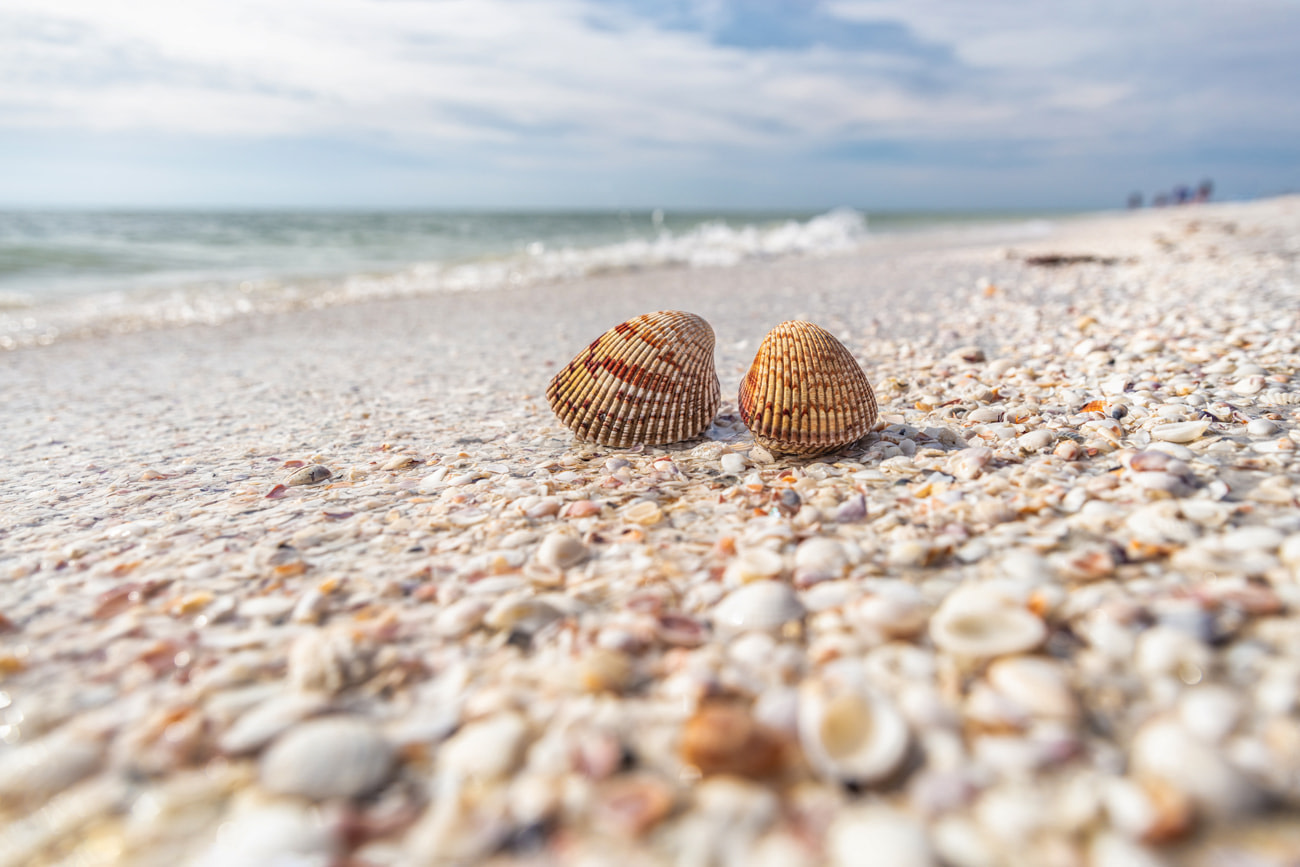
Best for: Shelling
Sanibel sits on a plateau that extends deep into the Gulf and acts as a natural ledge, trapping shells that would otherwise keep going. The result is the best shelling in North America and a local posture that has its own name: the Sanibel Stoop.
Bowman’s is the quiet end of it. Fifty acres, 220 parking spots, and less infrastructure than Sanibel’s other beaches, which is exactly why the serious shellers come here. The prize is a Junonia: a cream-colored spiral covered in chocolate spots that lives in deep water and only washes up after a storm. Finding one still gets you in the local paper.
A note on timing: Sanibel took a direct hit from Hurricane Ian in September 2022, followed by Helene and Milton in 2024. All the island’s beach parks are open again, but recovery is ongoing. Check the City of Sanibel‘s beach park page before you drive out.
- Where: Sanibel Island, Lee County
- Parking: $5 per hour, 220 spaces. Pay by QR code or text. No coin machines, so bring a charged phone.
- Amenities: Restrooms, outdoor changing rooms and showers, drinking fountains, BBQ grills, picnic areas, playground, shade pavilion, fitness trail, shell kiosk
- Best time: Low tide, and the morning after a winter storm. December-March is peak shelling.
- Worth knowing: Live shelling is illegal in Lee County. If something’s still in it, put it back.
Egmont Key, St. Petersburg
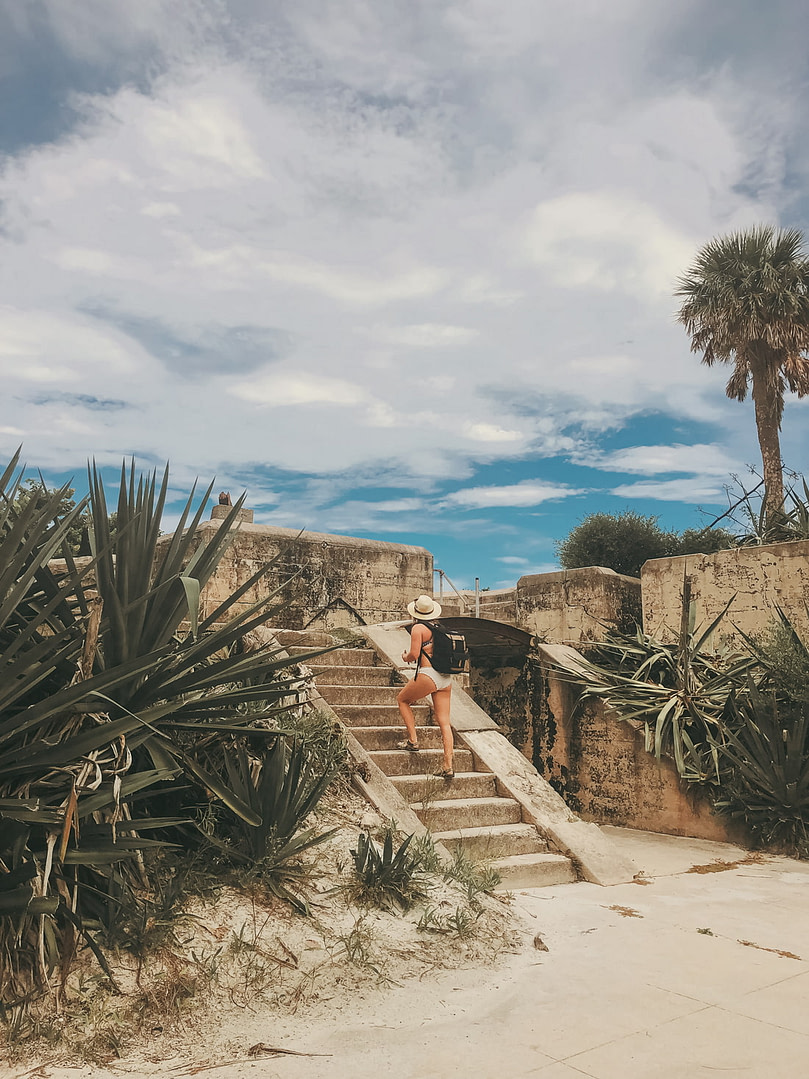
Best for: A day trip that feels like leaving the country
There’s an island in the mouth of Tampa Bay with a working lighthouse, the ruins of a Spanish-American War fort, gopher tortoises wandering the old brick paths, and beaches with nothing on them at all. It’s twenty minutes by boat from a metro area of three million people.
Egmont Key is a National Wildlife Refuge, and it’s only reachable by water. The ferry gives you about three hours ashore, which is enough for the fort, the lighthouse, a swim and a walk, without the sunburn.
Go while you can. The island has lost close to half its landmass since 1942 (from 535 acres to a little over 200) to erosion, sea level rise, and the dredging of Tampa Bay’s shipping channels. It is not a stable feature of the map.
- Where: Mouth of Tampa Bay, off Fort De Soto Park
- Getting there: Ferry from Fort De Soto boat ramp, 3500 Pinellas Bayway S, Tierra Verde. From $45. Roughly 5 hours total, ~3 hours on the island. Arrive 60 min early.
- Park fee: $6 per car to enter Fort De Soto, paid by plate
- Amenities: None. No food, no water, no shade beyond the trees. Bring everything, take everything out.
- Best time: October-April. No shade means summer is brutal.
- Worth knowing: The ferry has historically been cash only; confirm when you book.
The Best Beaches on Florida’s Atlantic Coast
The Atlantic side has actual waves, which changes everything: surf breaks, stronger currents, coarser sand, and a completely different set of things to do. It’s also the busiest coast, running from the Georgia border down through Daytona, the Space Coast, Palm Beach and into Miami. Listed north to south.
Fernandina Beach, Amelia Island
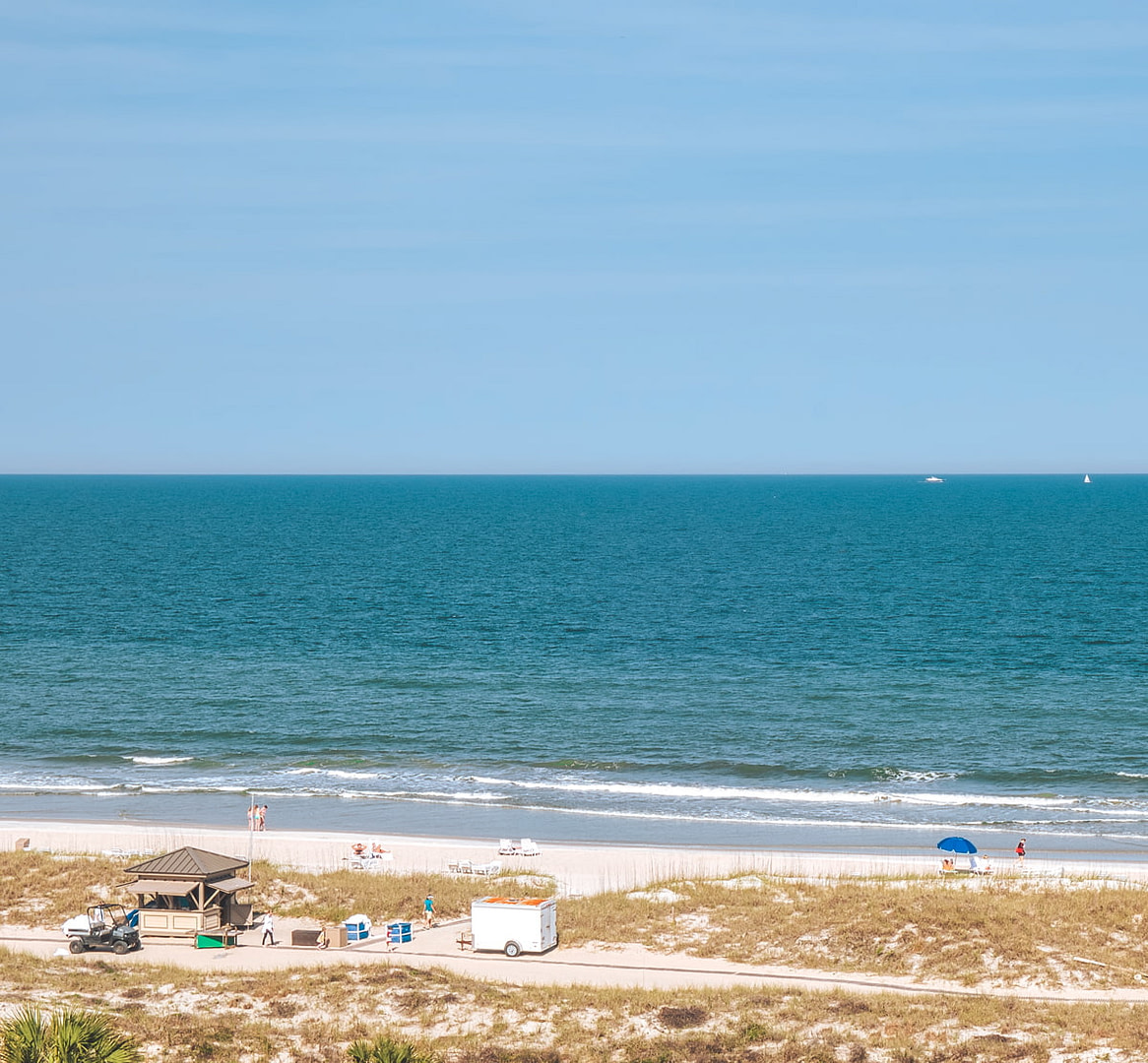
Best for: Dolphins
Amelia Island is the southernmost of the Sea Islands, close enough to Georgia that the accent shifts. Fernandina Beach is both the town and the strip of Atlantic sand, and its main draw swims: there’s a large resident population of bottlenose dolphins working the water just off the shore, and you have a genuine chance of seeing them without booking anything.
If you want better odds, take a boat excursion. Local lore has it there’s a pink dolphin in the area that’s been spotted a handful of times over the years; treat that as folklore rather than an itinerary item.
The town itself is worth an afternoon: a 50-block historic district, Victorian architecture, and the Palace Saloon on Centre Street – Florida’s oldest bar, pouring since 1903, with a 40-foot mahogany bar Adolphus Busch had a hand in designing. It was the last tavern in America to close for Prohibition, and it got through the dry years as an ice cream parlor.
- Where: Amelia Island, Nassau County
- Parking: Free lots at Main Beach Park. Fills by 10am on summer weekends.
- Lifeguards: Memorial Day through Labor Day
- Amenities: Restrooms, outdoor showers, picnic shelters, sand volleyball, skate park, playground, grassy park area
- Best time: Spring and fall. Bonus: right whales calve off this coast December-March.
- Accessibility: Dolphin Street access has ADA parking and access
Daytona Beach

Best for: Driving on the sand
Daytona is a motorsport capital because of a geological accident. The sand here compacts hard enough to take a car’s weight, so at the turn of the last century people started driving on it, then racing on it, and the Daytona Beach and Road Course eventually became the Daytona International Speedway and the headquarters of NASCAR.
You can still drive on it. Beach driving runs 8am-7pm or sundown from May through October, sunrise to sunset the rest of the year, tides permitting. Ten-mile-an-hour limit, headlights on, windows down. It costs $30 a day for a non-resident vehicle, or $150 for the annual pass. Volusia County residents go free.
If you’re timing a trip around the noise: Bike Week in March, Jeep Beach in April, and the Daytona 500 in February.
- Where: Volusia County
- Beach driving: $30 per vehicle per day (non-resident), $150 annual. Free for Volusia County residents.
- Driving hours: 8am-7pm/sundown, May 1-Oct 31 | Sunrise-sunset, Nov 1-Apr 30. Tide dependent.
- Amenities: Boardwalk, pier, restrooms, full resort strip
- Best time: Fall, unless you’re specifically here for an event
- Worth knowing: Access is limited to designated ramps and closes when the tide is too high. Check before you drive out.
Playalinda Beach, Cape Canaveral
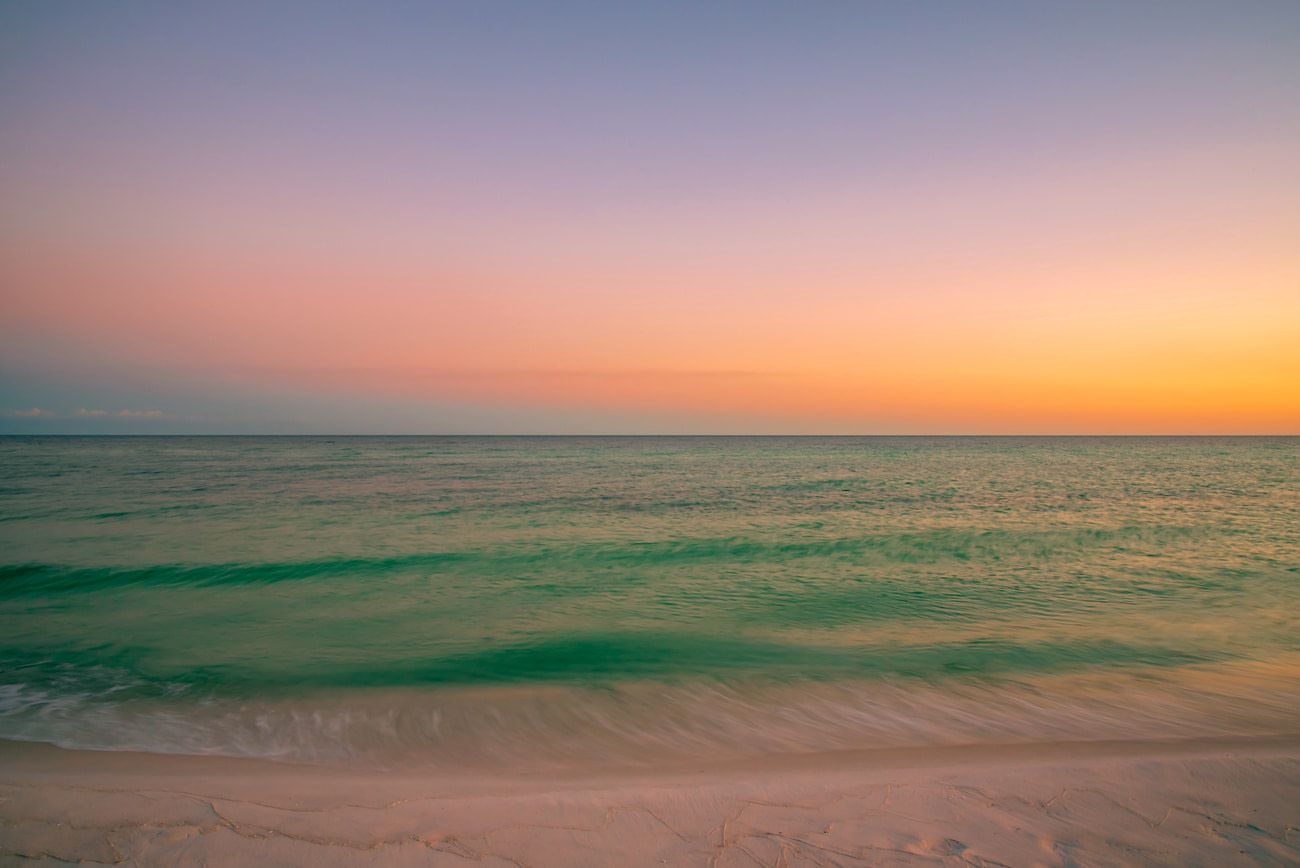
Best for: Watching a rocket go up
Playalinda is part of Canaveral National Seashore, which means no condos, no bars, no boardwalk. Just 24 miles of beach inside the longest undeveloped stretch of Atlantic coastline left in Florida. It looks approximately like the state did before the state happened. The water is clean and clear, and there is essentially nothing to do but be at the beach.
Except for the rockets.
Kennedy Space Center and Cape Canaveral Space Force Station are directly south, and Playalinda is one of the closest publicly accessible beaches to the launch pads. Launches don’t happen daily, but the cadence is high enough now that planning around one is realistic. Check a launch calendar before you book.
Two things have changed here recently: hurricane damage has closed the parking areas north of Eddy Creek, which is where the beach’s long-standing informal clothing-optional section used to gather (traditionally around lot 13). That activity has moved to the Eddy Creek area and its legal status has always been unofficial – nudity is technically illegal under a 1995 Brevard County ordinance, but the beach falls under federal jurisdiction and enforcement has historically been minimal. Confirm current access with the NPS before you go.
- Where: Canaveral National Seashore, Titusville
- Entrance fee: $25 per vehicle / $20 motorcycle / $15 pedestrian or cyclist, valid 7 days. Annual pass $45. Card and touchless payment accepted.
- Amenities: Very limited. Vault toilets, no concessions, no lifeguards, no shade. Bring water.
- Best time: Weekday mornings, or a scheduled launch window
- Worth knowing: The gate closes when the lots fill, which happens fast on launch days. Get there hours early.
Cocoa Beach
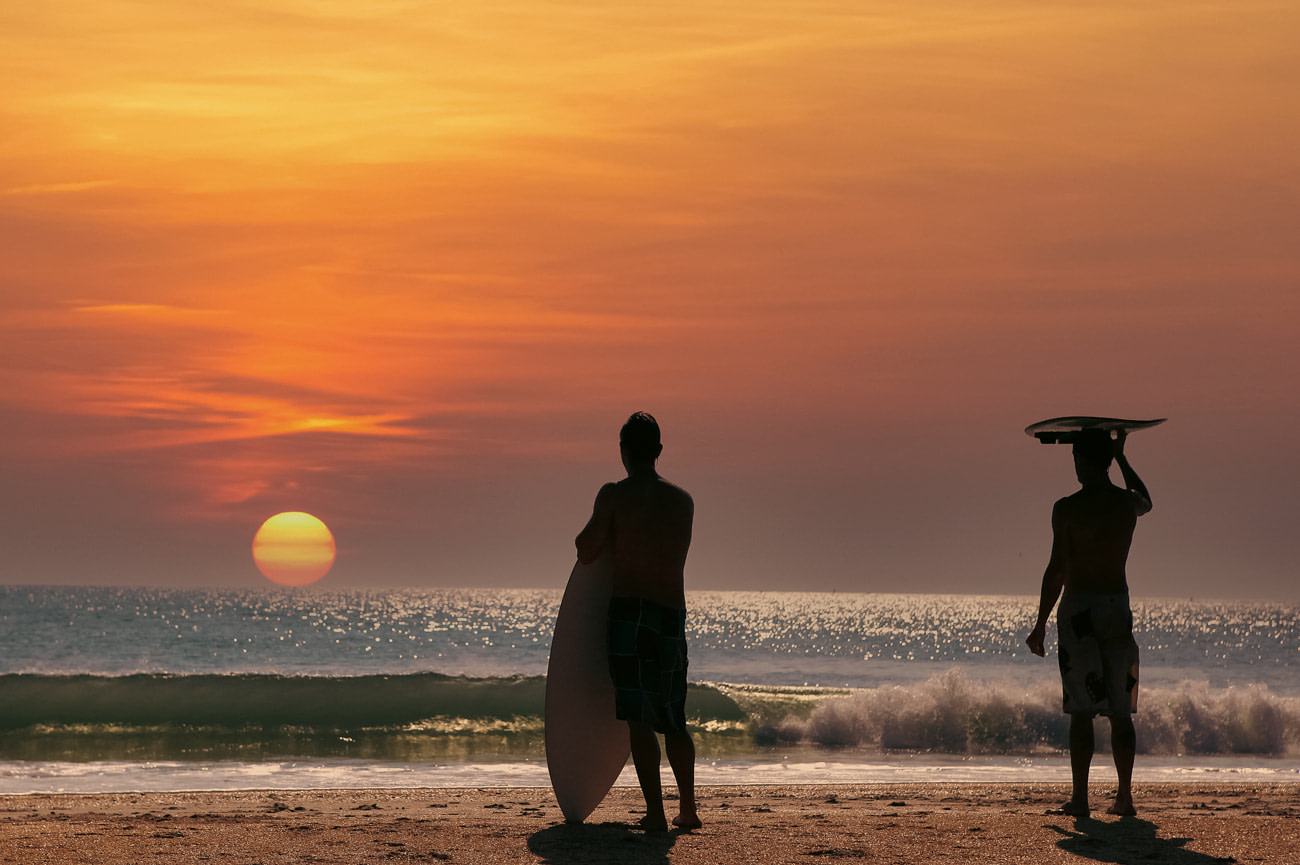
Best for: Learning to surf
Cocoa Beach is where Florida surfing happens. Six miles of Atlantic coastline with consistent, forgiving breaks. Small enough that beginners aren’t in danger, reliable enough that Kelly Slater grew up on them.
It’s also home to the largest surf shop on earth. The Cocoa Beach Ron Jon has been there since 1963, covers 52,000 square feet and never closes. You can rent boards, wetsuits and umbrellas from their beach rentals department, or book a lesson at the surf school next door (private hour-long lessons start around $65).
- Where: Brevard County, Space Coast
- Parking: Free customer lots at Ron Jon; metered street parking and paid beach lots elsewhere
- Amenities: Pier, restrooms, showers, rentals, surf school, restaurants, everything open late
- Lessons: Ron Jon Surf School, private lessons from ~$65/hour
- Best time: September-November for the best swell. Summer is small and beginner-friendly.
- Worth knowing: Ron Jon is open 24 hours. This is genuinely useful at 6am when you’ve forgotten wax.
Humiston Beach Park, Vero Beach
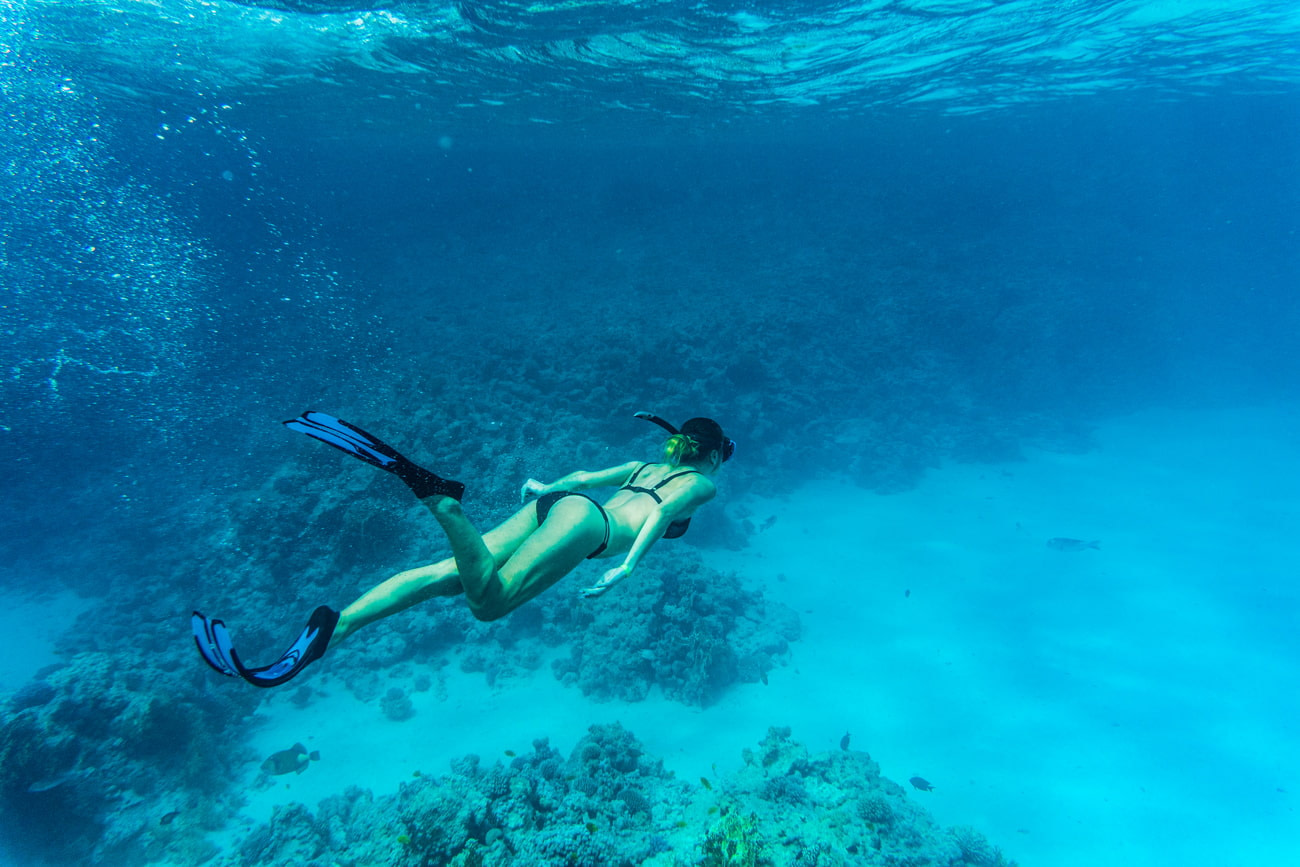
Best for: Snorkeling the reef line
Vero Beach has several good beaches. Humiston is the one with the amenities and the best upkeep, and it sits right in the beachside shopping district, so lunch is a two-minute walk rather than a drive.
The real reason to come is underwater.
Four parallel reef lines run just off this stretch of coast, close enough to reach by swimming, and they support over 400 species of marine life.
Then there’s the SS Breconshire – a 300-foot steamer that struck the reef here on April 30, 1894, en route from New York to Tampa, split her hull, and went down in about 20 feet of water. The whole crew got off in lifeboats. Her boiler still breaks the surface, which is how she got the local name: the Boiler Wreck. It sits roughly 300 yards out, close enough to paddle a kayak or board to and snorkel from, and it’s the most popular shallow wreck on the Treasure Coast.
- Where: 3000 Ocean Drive, Vero Beach
- Parking: Free but limited. Overflow on Ocean Drive or one block west on Cardinal Drive.
- Lifeguards: On site daily; hours vary seasonally
- Amenities: Restrooms, showers, playground, picnic pavilions and shelters, grills, electricity, ADA accessible
- Best time: Calm mornings in summer for snorkeling visibility
- Worth knowing: Visibility drops sharply after a blow. Check the surf report before you pack a mask.
Jupiter Beach
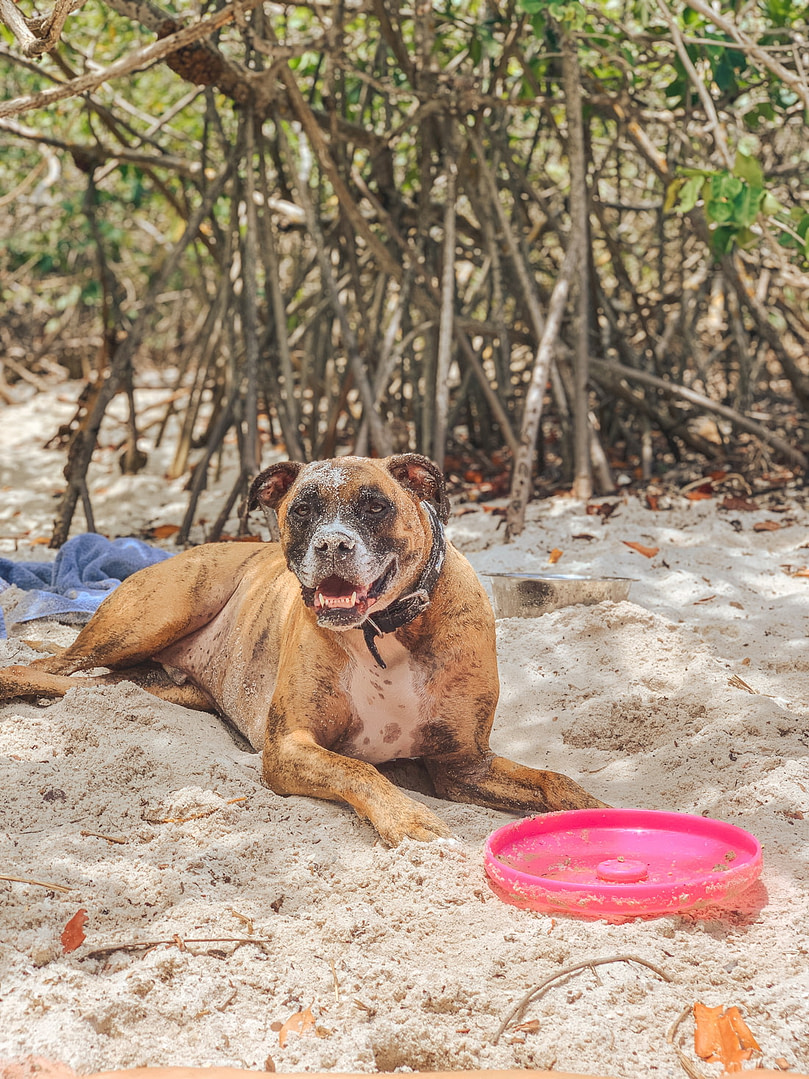
Best for: Dogs
Jupiter has one of Florida’s longest and most permissive dog-friendly beach stretches – 2½ miles where well-behaved dogs run off-leash. That makes it something close to a pilgrimage site for Florida dog owners, and on a Saturday morning it is a very happy, very sandy place.
The rules are looser than most people expect and stricter than they look. Dogs must be under voice command at all times, leashed from the car to the sand and back, and leashed around small children, water fountains, and crossovers. The local shorthand is that your dog needs to be a B.O.W. – behaved, obedient, and well-socialized.
Note that Juno Beach, immediately south of marker #25, is strictly no dogs. Don’t drift.
- Where: Jupiter, Palm Beach County
- Dog section: From #26 (north of Ocean Cay Park, 2188 Marcinski Road) to #57 (south of Carlin Park).
- Rules: Off-leash permitted, voice control required. Leash from car to sand. Clean up after your dog.
- Parking: Free and paid lots along Ocean Drive; fills early
- Best time: Early morning, before the sand gets hot on paws
- Worth knowing: Free dog waste bags at all 29 dune crossovers, stocked by Friends of Jupiter Beach.
South Beach Park, Boca Raton
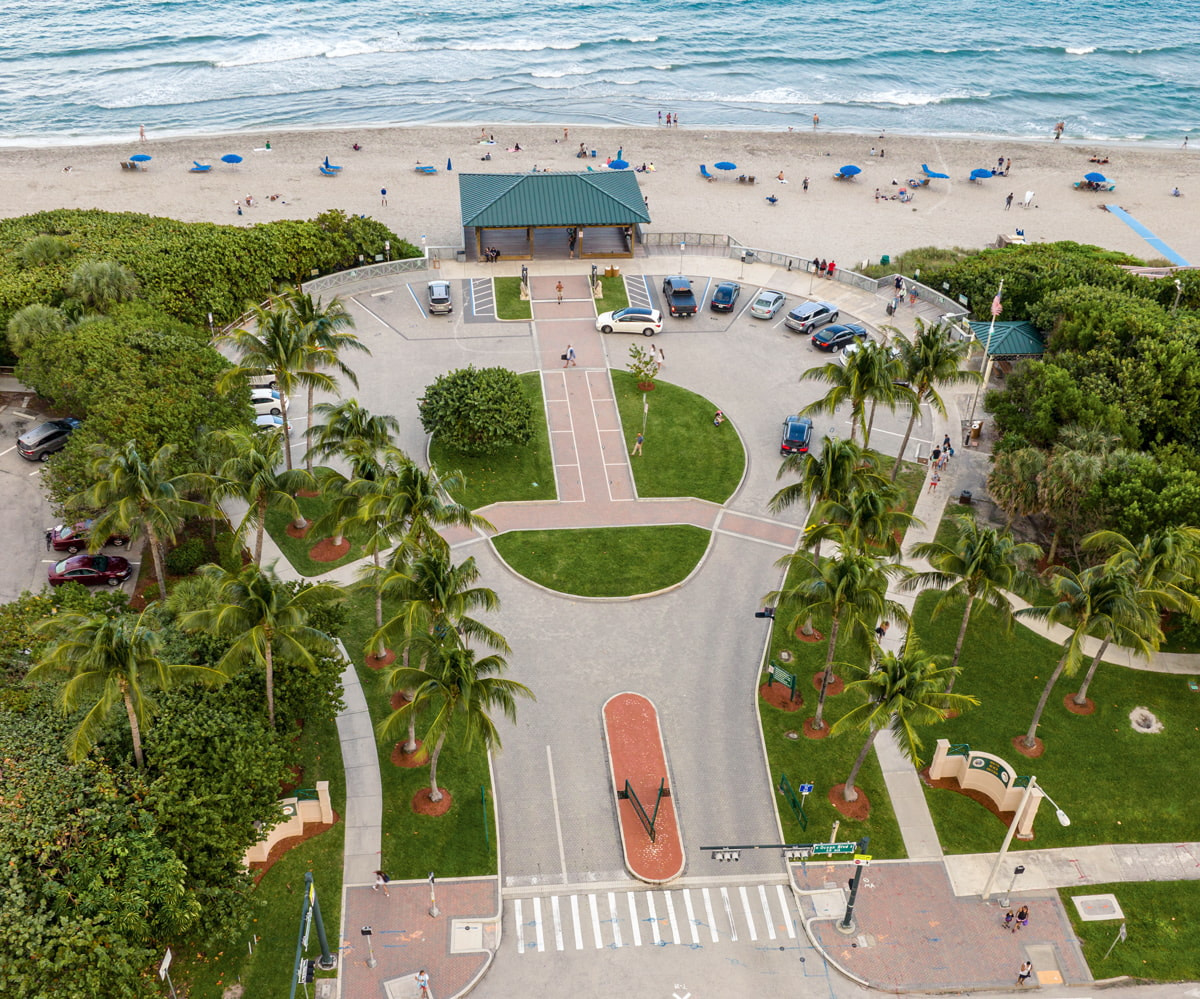
Best for: A beach day with a hotel-grade setup
Boca Raton is Florida’s unofficial capital of the well-appointed, and its public beach reflects that. South Beach Park has restrooms, beach showers, a covered pavilion overlooking the water, a playground, and shoreside stations renting umbrellas and loungers, so you can arrive with nothing and still have a proper day.
The beach itself is free. The parking is where Boca charges you, and it charges more than anywhere else on this list.
- Where: 400 N State Rd A1A, Boca Raton
- Daily parking: Car, minivan or motorcycle: $35 weekdays, $50 weekends and holidays. Bus, truck or cargo van: $85 weekdays, $120 weekends and holidays. Trailer behind a vehicle: +$30
- Amenities: Restrooms, showers, covered pavilion, playground, umbrella, and lounger rentals
- Best time: Weekday mornings. Mizner Park is 10 minutes away for lunch.
South Beach, Miami Beach
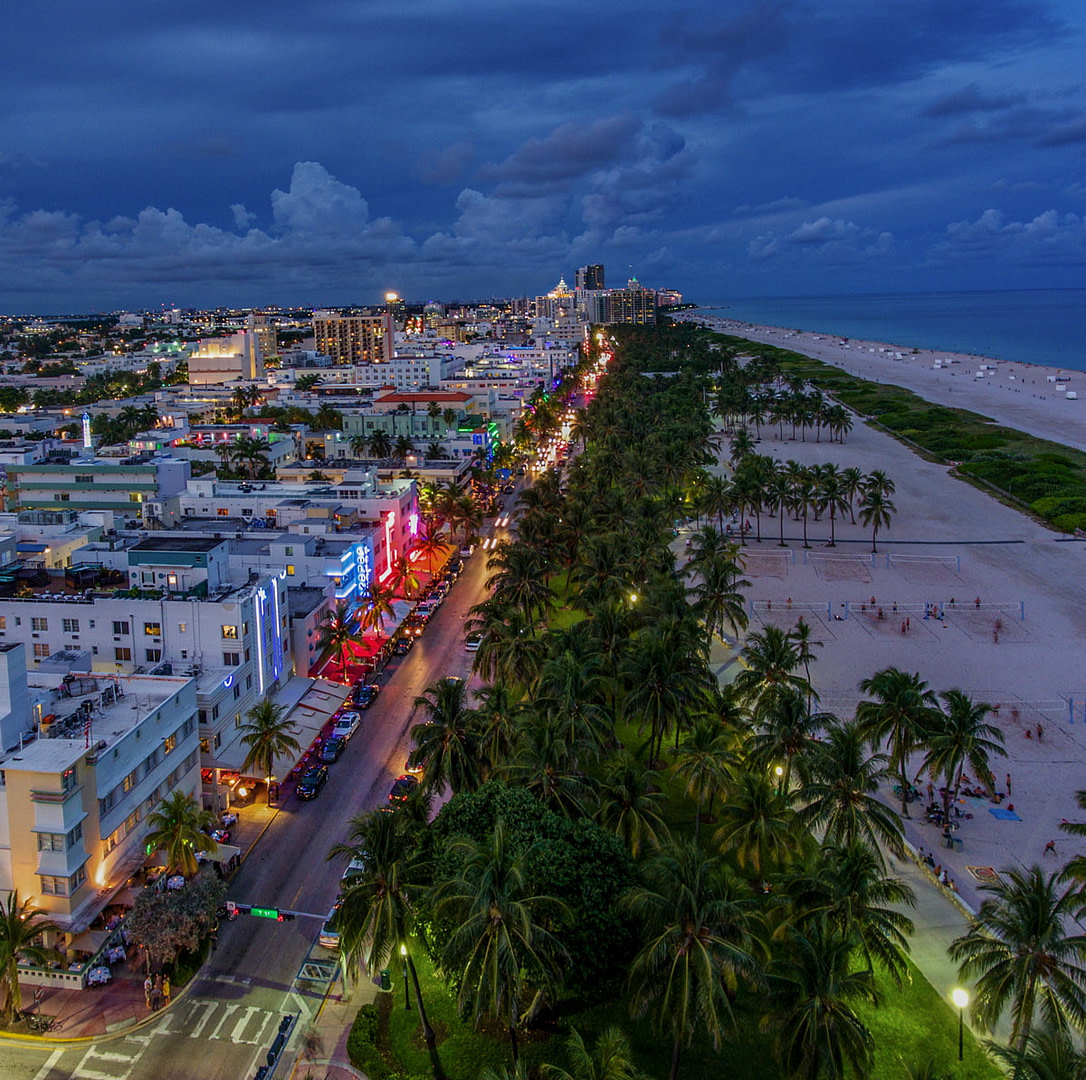
Best for: Not going home at sunset
South Beach’s reputation is all nightlife, which undersells the actual beach. The sand is unusually wide for an urban shoreline, the dunes are real, and Lummus Park buffers the whole thing from Ocean Drive with a strip of grass, palms, and paved paths full of cyclists and skaters. Muscle Beach is here, with 30-odd pieces of outdoor gym equipment and no shortage of people using them.
Then the sun goes down, and you’re a hundred meters from the bars and clubs of Ocean Drive and Collins Avenue. No other beach on this list lets you do both days in one day.
- Where: Lummus Park, Ocean Drive, Miami Beach
- Beach access: Free
- Parking: Lots and garages from around $8; metered street parking at Lummus Park is limited. Budget $20+ on a weekend, or don’t drive.
- Amenities: Restrooms, showers, playground, drinking fountains, Muscle Beach outdoor gym, bike and scooter rentals, paved paths
- Best time: Weekday mornings for the beach. Any night for the rest.
- Worth knowing: Parking enforcement is aggressive and towing is real. Read the sign twice.
Crandon Beach, Key Biscayne
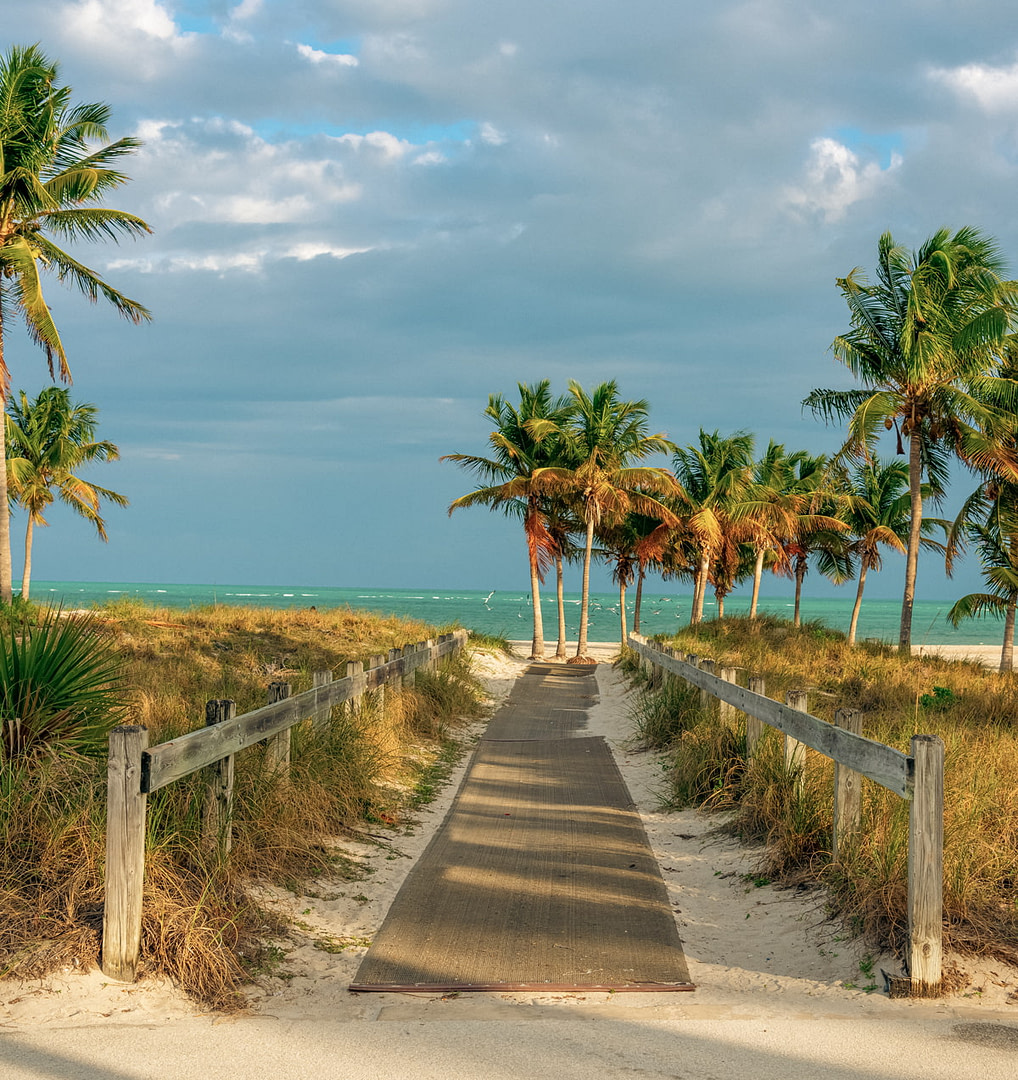
Best for: A day trip from Miami that doesn’t feel like Miami
Twenty minutes from downtown Miami across the Rickenbacker Causeway and you’re on a two-mile beach with shallow, gentle water and wild peacocks strutting around the picnic areas like they own the parking lot. Which they somewhat do.
An offshore sandbar takes the punch out of the surf, which makes this the better Miami-area choice with kids. It gets busy at weekends, but there’s parking for just under 3,000 cars and two miles of sand absorbs a lot of people.
- Where: Crandon Park, Key Biscayne, Miami-Dade
- Getting there: Rickenbacker Causeway, ~$2.25 toll
- Parking: $7 plus tax Monday-Thursday. $10 plus tax Friday-Sunday
- Park hours: 8am-6pm, seven days a week.
- Amenities: Restrooms, showers, changing areas, picnic tables, grills, cabana rentals, chair and umbrella hire, kiteboard and kayak rentals, nature center, paved promenade, beach wheelchairs
- Best time: Weekday mornings
- Worth knowing: No pets except service animals. Personal kayaks and paddleboards can’t launch from the beach; they have to go from the marina.
The Best Beaches in the Florida Keys
Here’s the irony of the Keys: the reef that makes them famous is the exact reason they have almost no sand. Offshore reefs break the wave energy that would otherwise grind coral and shell into sand and pile it onto the shore.
So the Keys get world-class diving and very few beaches. These two are the exceptions worth planning around.
Sombrero Beach, Marathon
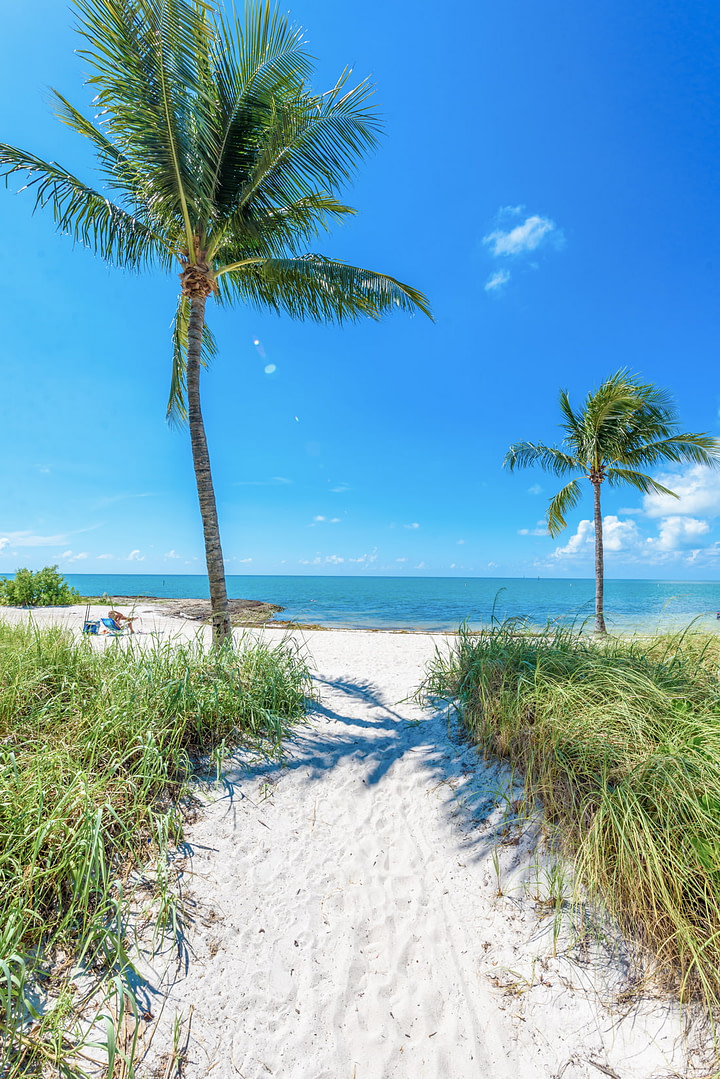
Best for: An actual swimming beach in the Keys
Roughly halfway between Key Largo and Key West, Sombrero Beach has calm water, clean sand, coconut palms, and a shaded park behind it with picnic pavilions, playgrounds, and volleyball courts. It is comfortably the best public beach in the Keys, and it isn’t especially close.
Visit between April and October, and you’ll find sections roped off for loggerhead turtle nests. Leave them alone and enjoy the fact that you’re standing somewhere turtles have decided is good enough to raise young.
- Where: Sombrero Beach Road, Marathon
- Hours: 7am-dusk, daily
- Parking: Call the park at (305) 743-6598 before you go. Paid parking has been reported (around $5/hour for the first two hours) but the City doesn’t publish a rate, so don’t assume either way.
- Amenities: Restrooms, showers, filtered water stations, picnic pavilions, playgrounds, volleyball courts
- Accessibility: Level paths to the sand, ramps to all buildings
- Best time: Weekday mornings. April-Oct for turtle nesting.
- Worth knowing: No RV or bus parking at all. There’s a live webcam on the Florida Keys site if you want to check the crowd before you drive down.
Seaplane Beach, Dry Tortugas National Park
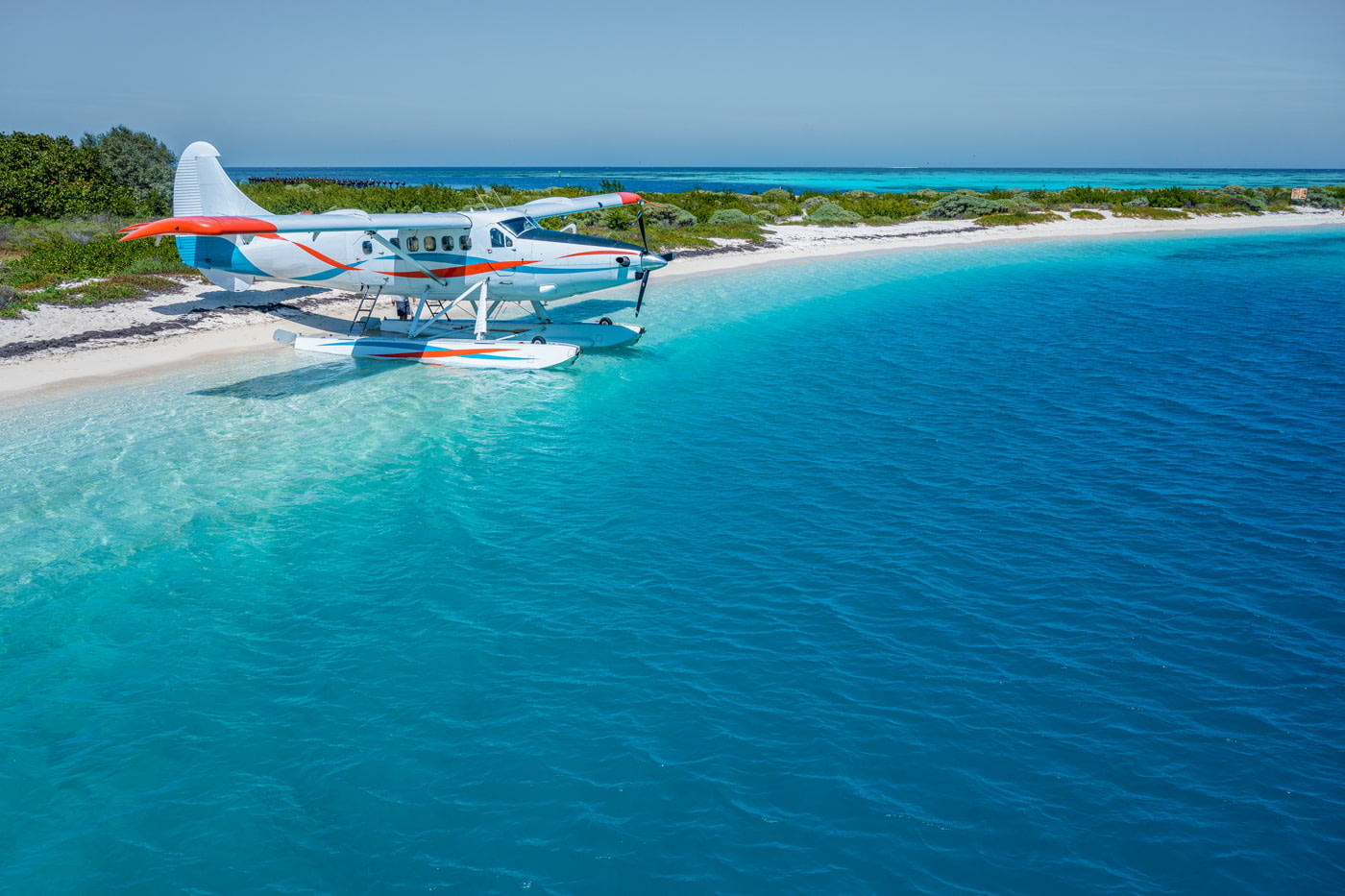
Best for: The most remote beach you can reach in a day
Seventy miles west of Key West, at the tail end of the archipelago, Dry Tortugas is one of the least-visited national parks in the country – a handful of tiny islands, a colossal unfinished 19th-century fort, and water so clear the boundary between sea and sky gets confusing.
Garden Key is where you land, and Seaplane Beach is the strip of sand where Key West Seaplane Adventures puts down. Two flights a day, so if you’re camping overnight you’ll have several chances to watch a plane land on a beach, which does not get old.
Getting here is the whole exercise. The ferry runs around $235 for an adult plus the $15 park entrance fee, and gives you roughly four hours ashore. The seaplane is $507 per person for a half day (2.5 hours on the island) or $890 for a full day (6.5 hours). It is a lot of money, and it is the correct amount of money for the one national park most people never see.
- Where: Garden Key, Dry Tortugas NP, 70 miles west of Key West
- Entrance fee: $15 per person, valid 7 days. Free under 16.
- Ferry: ~$235 adult + entrance fee, ~4 hours on the island
- Seaplane: $507 half day (2.5 hrs) / $890 full day (6.5 hrs)
- Amenities: Composting toilets on the ferry and at the fort. No shops, no fresh water, no shade to speak of.
- Camping: Primitive sites on Garden Key. Book far ahead.
- Best time: November-April. Calmer seas, fewer cancellations.
- Worth knowing: Ferries cancel for weather with no notice. Don’t schedule a flight home for that evening.
The Best Beach in Florida That Isn’t on the Coast
Lake Louisa Beach, Lake Louisa State Park
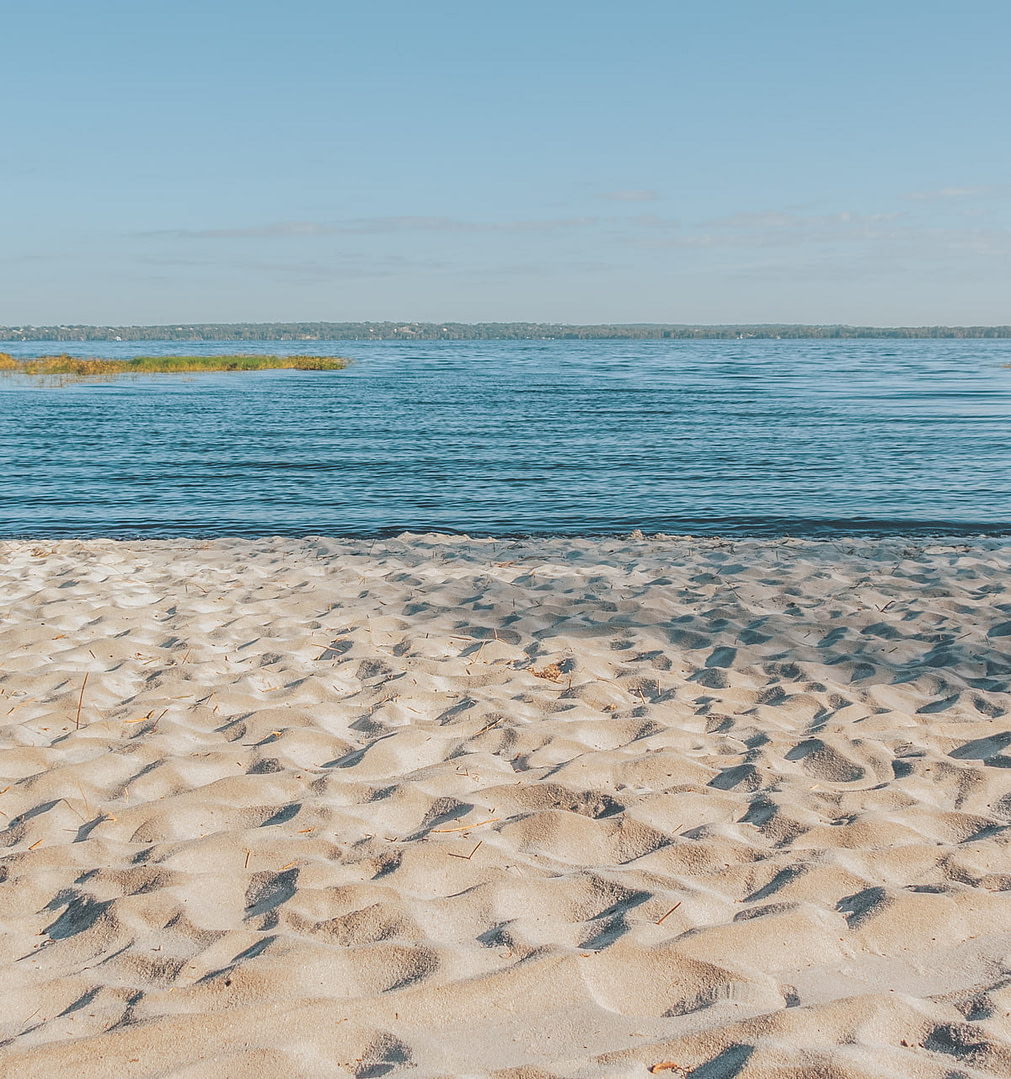
Best for: A beach day within reach of Orlando
The only entry here that isn’t on saltwater. Lake Louisa State Park sits less than half an hour from Orlando and has something most Florida lakes don’t: a proper sandy swimming beach.
What you get instead of surf is the version of Florida that theme park visitors never see: cypress wetlands, live oaks hung with Spanish moss, sandhill cranes, and enough native butterflies that the park keeps a list. It’s a genuinely good reset day if the parks have worn you down.
Check before you go: the lake’s water level swings with the season, and the park has suspended swimming and closed the beach restroom during dry spells. It’s not a permanent closure, and it isn’t always in effect, but it’s worth thirty seconds on the Florida State Parks site before you drive out, because the beach is the whole reason you’re going.
- Where: 7305 US Highway 27, Clermont. ~30 min from Orlando
- Hours: 8am to sundown, 365 days a year
- Entrance fee: $5 per vehicle (2-8 people) / $4 single occupant / $2 pedestrian or cyclist
- Amenities: Beach, restrooms, trails, cabins, camping, kayak and bike rentals
- Lifeguards: None. Swim at your own risk.
- Best time: Cooler months. Central Florida summer afternoons come with reliable thunderstorms.
- Worth knowing: Arriving after sunset with a camping reservation? Call 352-394-3969 for the gate code first.
Frequently Asked Questions
For most first-time visitors, Siesta Key Beach is the strongest all-round choice. Its quartz sand, broad shore, typically gentle shallows, lifeguards, restrooms, concessions, and family facilities make it both beautiful and practical. Travelers who prefer solitude will likely choose differently.
For pure looks, the Panhandle wins — Navarre and Johnson Beach on Perdido Key have the whitest sand and the greenest water in the state. For drama rather than color, Dry Tortugas is unmatched: a 19th-century fort on an island 70 miles out to sea, ringed by water you can see the bottom of.
Dry Tortugas National Park, comfortably. It’s 70 miles offshore with no rivers, no runoff, and no development, which is exactly the combination clear water requires. On the mainland, Navarre Beach and Johnson Beach on the Panhandle come closest.
The Gulf Coast generally suits travelers who prioritize softer-looking water, gentler conditions, and sunset. The Atlantic is usually better for surfing, waves, sunrise, and energetic beach towns. Neither coast is always calm or always clear; wind, storms, tides, and seasonal conditions matter.
Late spring and fall often bring warm weather without the peak crowds of major holidays, although hurricane season runs from June through November. Winter can be lovely in South Florida and the Keys but cooler in the Panhandle. Summer is hot, humid, storm-prone, and busy with families.
Check the local weather, rip-current forecast, beach warning flags, water-quality notices, red-tide reports where relevant, parking rules, and any wildlife or storm-related closures. For remote islands and national seashores, also confirm transport schedules and operating hours.
One Last Thing Before You Choose
Florida’s best beach is the one that fits the day you want.
Maybe that means carrying your own water onto Egmont Key and hearing almost nothing once the boat leaves. Maybe it means a surf lesson at Cocoa Beach, cool quartz underfoot at Siesta Key, your dog sprinting along Jupiter, or a swim at South Beach followed by an evening beneath the neon.
Pick for temperament first and scenery second. Florida has enough coastline to give you both.