
Easter is one of the most important holidays of the year, and every single country has a unique way of celebrating it according to its own beliefs, traditions, and customs.
I believe that Easter is a great opportunity to travel and explore diverse religions and practices from different parts of the world, and an excellent chance to learn about other cultures because, after all, that’s what makes us understand the world better.
If you’re wondering where to travel this Easter, here are 5 inspiring destinations to choose from:
Malta
Situated in the Mediterranean Sea, very close to Italy, Malta is a country and an archipelago consisting of only 3 main inhabited islands: Malta, Gozo (Ghawdex), and Comino (Kemmuna).
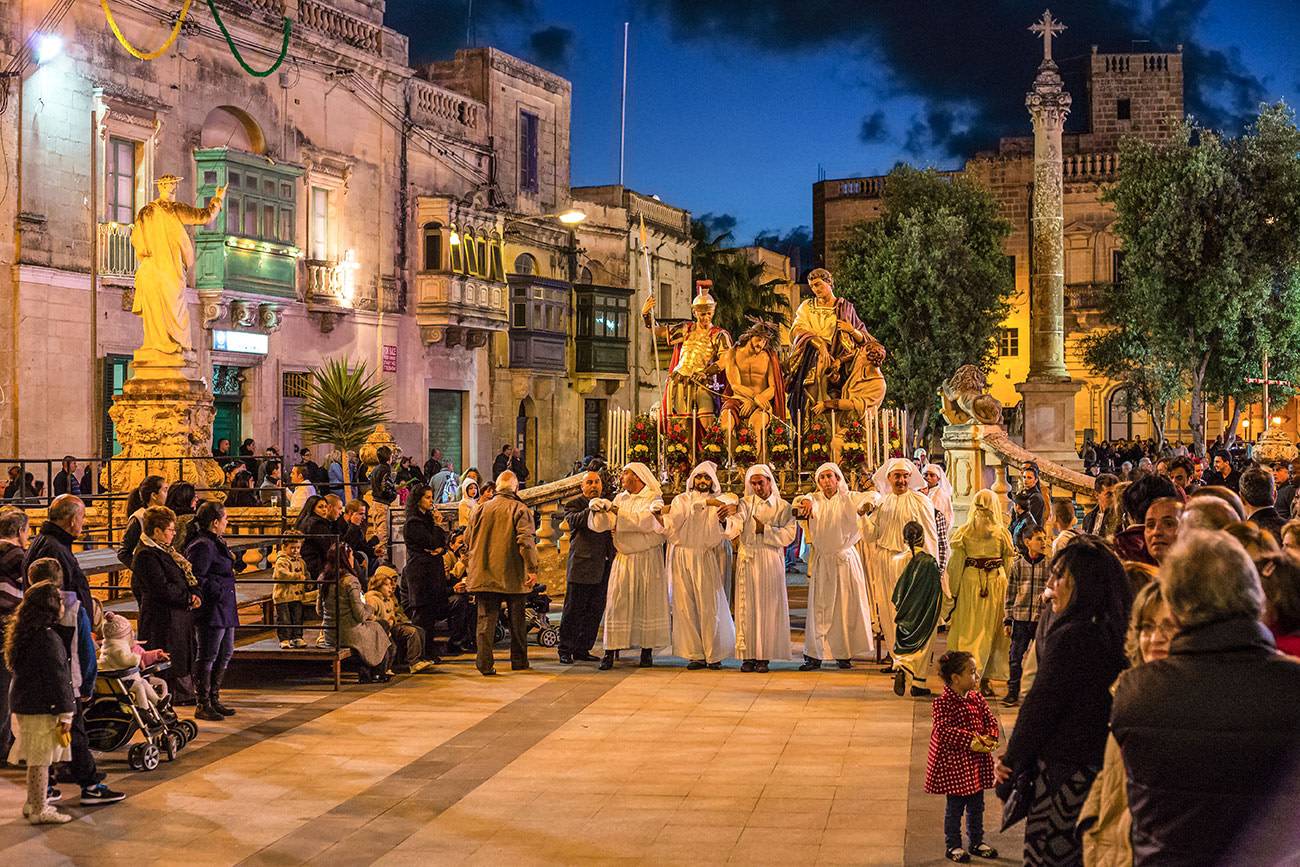
Being one of the most religious Catholic countries in the world, Malta hosts various parades and celebrations during this time of year, which makes it one of the most interesting destinations to spend Easter and the Holy Week.
This period is marked by an intense sequence of parades, traditions, and spiritual celebrations. The days with the greatest significance for Maltese people are Maundy Thursday, Good Friday, and Easter Sunday – all celebrated with great passion and spirituality. Maundy Thursday is recognized for the tradition of visiting the seven churches, as well as for many other interesting practices taking place on the streets of Malta.
On Good Friday, several Maltese towns and villages reconstruct biblical scenes, creating captivating displays. On this important day of the year are taking place various parades, such as the Roman soldiers’ spectacles or the processions, where participants, dressed in white robes and hoods, walk with metal chains tied at their ankles while carrying wooden crosses.
Easter Sunday, although marked by great religious significance, is dominated by an atmosphere of joy and festivity. Family members gather in order to spend some time together, have lunch, drink, have fun, exchange presents, and serve the traditional Easter dinner, usually consisting of lamb with potatoes and vegetables. The most popular Maltese Easter sweet is the figolla – a sweet baked pastry filled with almonds.
Easter is a good opportunity to visit Malta due to its pleasant climate during this period (20 degrees during the day), the fascinating customs, and the rich culture of this tiny, sacred place.
Rome, Italy
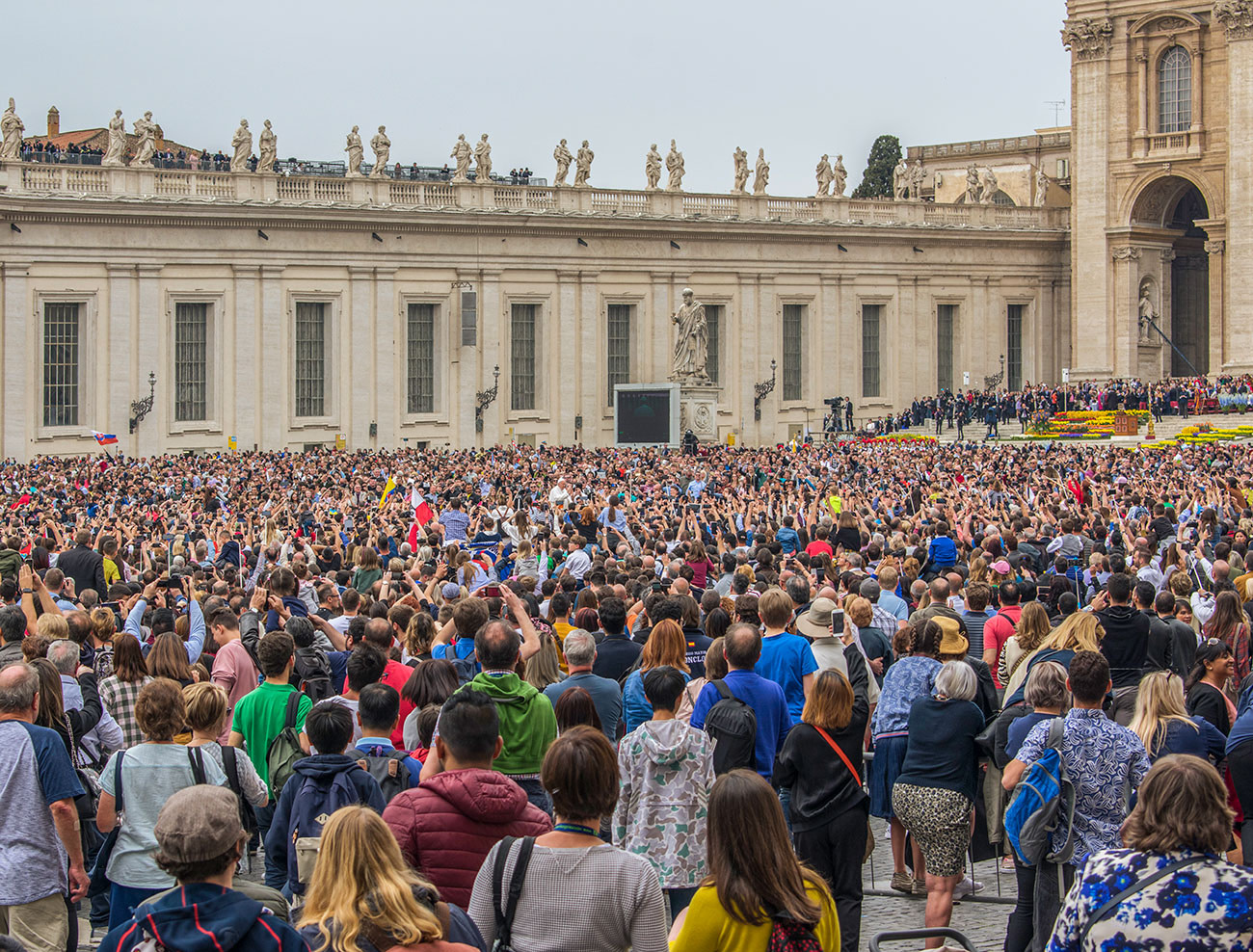
The biggest holiday in the Italian calendar, Easter, or Pasqua, is elaborately celebrated in the Eternal City. Although tourists from all over the world, especially the religious ones, crowd to take part in one of the most important events that occur every year in Rome and Vatican City during Easter time, spending this holiday in such a remarkable city will definitely be a unique experience.
The last week of Jesus’ life is solemnly celebrated with pilgrimages, streets blooming in scents of spring, windows filled with chocolate eggs, lots of greenery, and a refreshing buzz that seems to awaken the ruins, giving birth to a fresh new Rome.
The grandness of experiencing the most important Catholic celebration in St. Peter’s Basilica in the middle of Vatican City, so close to the Pope, has a special significance, but the small neighborhood churches, each with its distinctive charm, will be able to induce you in the same magnificent atmosphere of traditions and Catholicism.
Besides Easter Sunday, when people usually get together with families, the Italians also have one more reason to rejoice in this period. Pasquetta or “the little Easter” is a sort of continuation of the holy celebration and a national holiday held on the Monday after, when people usually spend time with friends, go to picnics, or drive into the countryside to enjoy the nature.
The delicious Italian food plays an important role in the Easter celebration. Traditional dishes include lamb or goat, artichokes, and special Easter breads, such as the famous Panettone and the dove-shaped Colomba.
Jerusalem
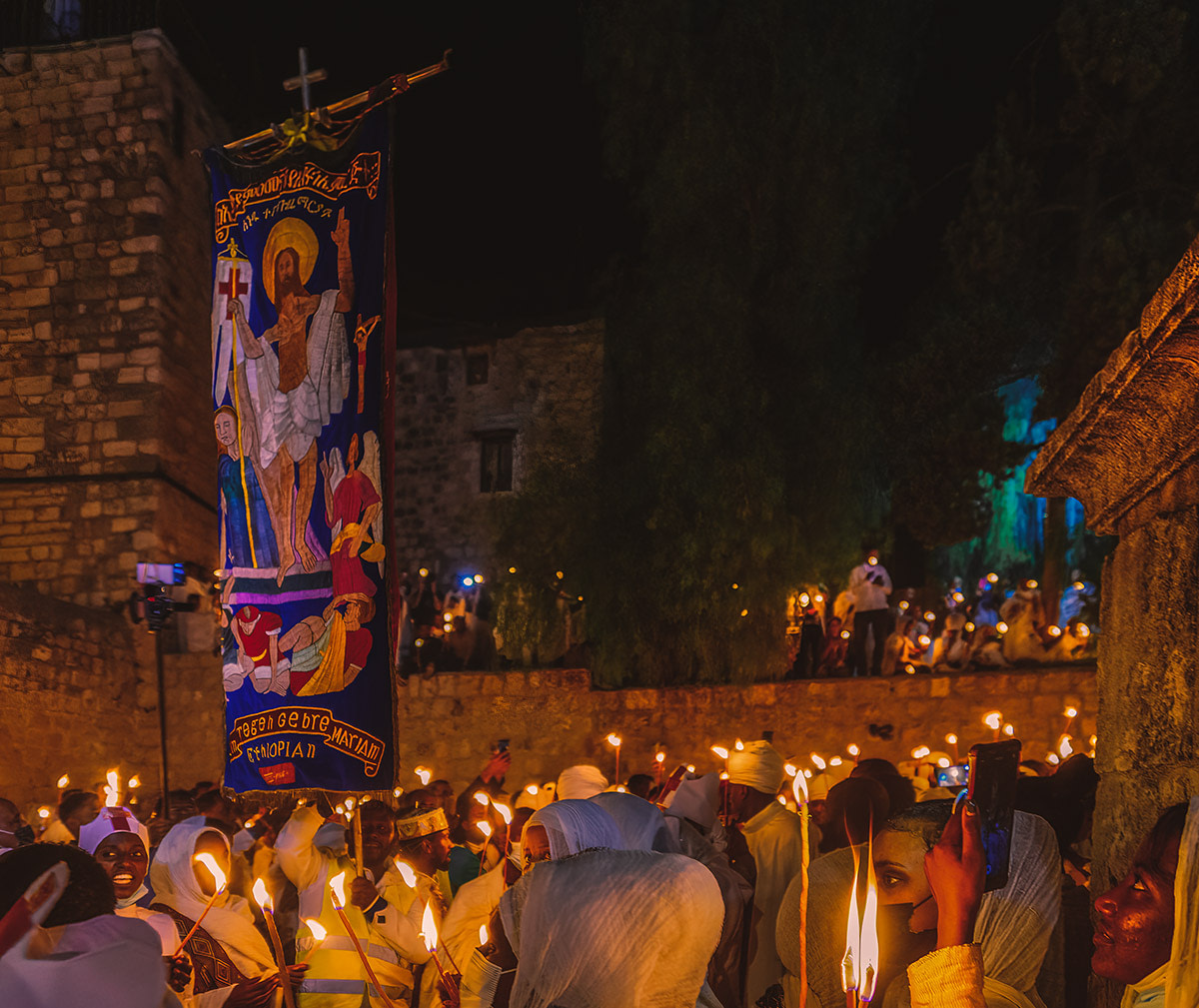
If you are a religious person, there is definitely no better destination to spend Easter than the Holy Land, following the steps of Jesus. But even if you’re not, chances are you will still be impressed by the uniqueness of Jerusalem, the most sacred place in the world and a fantastic city that dates back nearly 4,000 years ago.
Every year, thousands of Christians from across the planet head to Jerusalem to spend the authentic Holy Week. The celebration consists of a remarkable range of pilgrimages. Following the Bible, the holiday begins on Sunday with a gathering on the Mount of Olives, while on Monday, it is frequently visited the Dome of the Rock. Wednesday is the day to visit Coenaculum (the site of the last supper). The highlight of the pilgrimage is definitely the walk along Via Dolorosa, the path walked by Jesus Himself.
This one-of-a-kind experience, full of emotion and intensity, is worth the trip to Jerusalem, whether you are a convinced believer, a curious looking for answers, or just a traveler in search of memorable experiences. The contrast between the Old City and the new side makes Jerusalem a vibrant, culture-rich destination, one that should be part of any avid traveler’s bucket list.
Madrid
Easter in Spain is very interesting, and besides Seville, Madrid is one of the best destinations to spend it.
In Madrid, Semana Santa (Holy Week) comes with over 20 religious processions, starting with Domingo de Ramos (Palm Sunday), when locals purchase palm branches and laurels in memory of Jesus.
Miércoles Santo, or the Holy Wednesday, is marked by the participation of Madrid’s Archbishop at the Stations of the Resurrection.
On Jueves Santo (Maundy Thursday), visitors can observe a spectacular moment at the cathedral Colegiata de San Isidro: the religious statues of Virgin Maria Santisima de la Esperanza and Jesus del Gran Poder are brought out of the beautiful Gothic cathedral by the costaleros (the people, usually locals, who carry the pasos proudly on their shoulders).
Viernes Santo (Good Friday) is the day of the Procession of Silence, a parade that tours several emblematic churches in Madrid, starting with the Church of Santisimo Cristo de la Fe and finishing with the Basilica del Cristo de Medinaceli. At 19:00 o’clock, participants stop in Plaza de Jesus, spreading on the city’s streets.
Nuestra Senora de la Soledad is the main event of the Holy Saturday (Sabato Santo), and lots of people are attending the march.
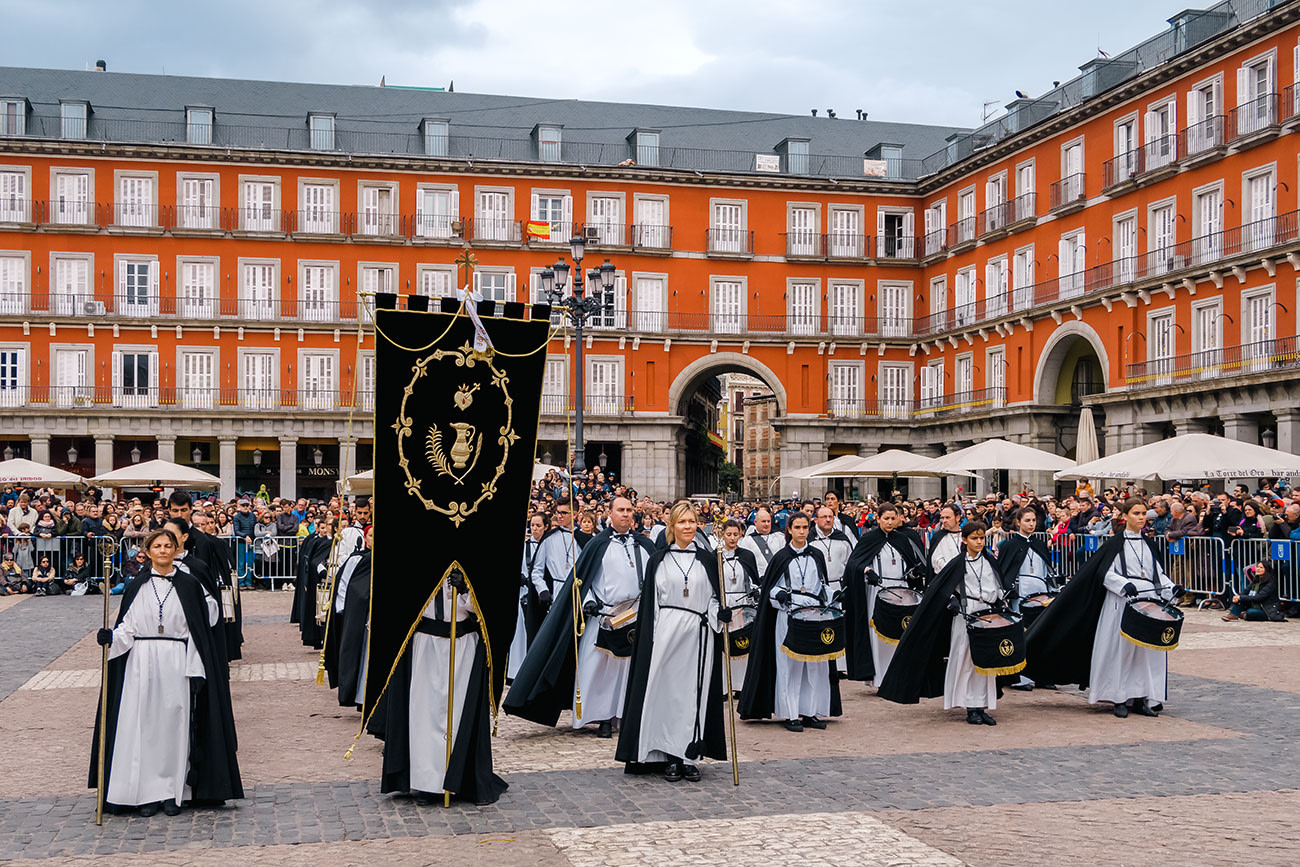
The most important event on Easter Sunday is the traditional Tamborada del Domingo de Resureccion, consisting of drummers marching and performing in the famous Plaza Mayor.
If you spend Semana Santa in Madrid, make sure you’ll taste the torrijas – an Easter sweet consisting of slices of bread soaked in milk, sugar, and egg, fried in olive oil. I’ve always believed that this is a Romanian treat! My mother used to make these when I was a child.
Bucovina, Romania
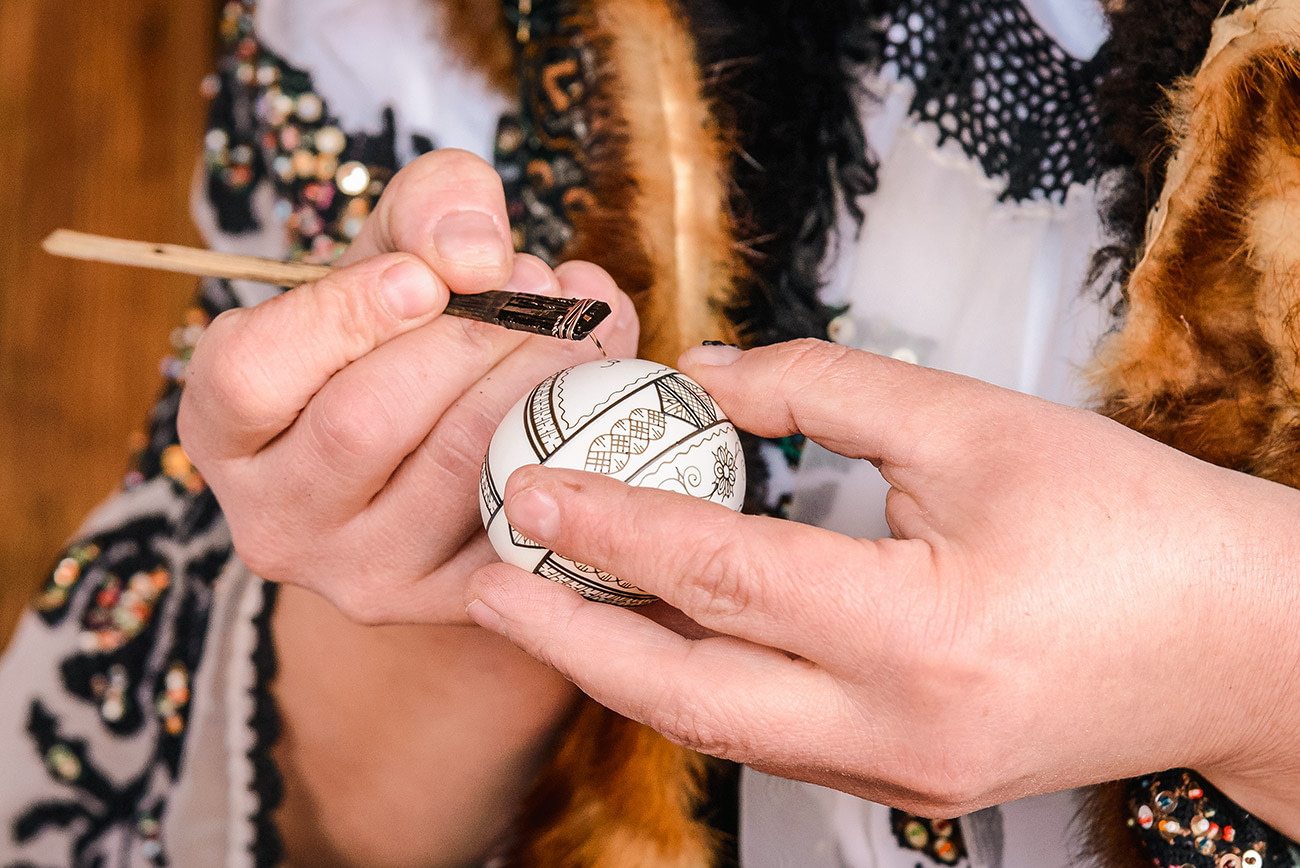
Bucovina, one of the most traditional and picturesque regions in Romania, is an excellent place to spend the Easter holidays.
In this delightfully traditional area, Easter means being near God and celebrating the Resurrection of Christ with Christian traditions. Renowned for its beautifully painted monasteries, this quaint corner of Romania will be dressed in holiday garb and it will taste so good that you will find it almost impossible to leave.
One of the most representative Easter traditions in Bucovina is the painting and decoration of eggs, a beautiful custom and a veritable form of art transmitted from one generation to the next in this part of the world.
The Holy Week, or Saptamana Patimilor (Passion Week), begins with Duminica Floriilor (Sunday of Flowers) when all the people with flowers’ names are celebrated and willow branches are brought to the church in order to be sanctified.
During Passion Week, all Christians should abstain from human pleasures, whether corporal or food related (the consumption of animal products is not allowed during this period).
On Black Thursday, women dye the eggs, bake Pasca (traditional Easter bread), and, in the evening, everyone goes to church to take part in the Great Denia. On Saturday night, all churches are filled with crowds who come to take Paste – a piece of consecrated bread soaked in wine. After the religious service, they all leave the church with lit candles.
The Great Sunday is celebrated with food, drinks, new clothes, and harmony. Most Romanian families spend this holy day together at home or enjoy a barbecue if the weather is pleasant.
A traditional Romanian Easter meal includes painted boiled eggs, various lamb dishes (drob, lamb soup, or roasted lamb), and cozonac (a traditional sweet bread filled with walnuts, cocoa, and Turkish delights).
A custom you will always observe in a Romanian house for Easter is knocking the eggs.